
Table of Contents
Why user needs drive seating decisions
Design choices begin with people. When planners prioritize audience comfort and movement, everything from entry queues to evacuation times improves. For many venues the first tangible decision is the type of auditorium seating to specify: fixed rows, retractable configurations, or hybrid systems. A user-centric approach treats seating as an operational instrument that governs sightlines, ergonomics, and flow rather than merely as décor.
Key design elements that affect daily operations
Focus on three concrete variables: row spacing, seat pitch, and aisle clearances. Row spacing and seat pitch determine how quickly patrons enter and exit and how long turnovers take between shows. Aisle width ties directly to fire egress and daily convenience. Sightlines influence ticket pricing and perceived value. These are not abstract concerns; they shape cleaning cycles, staffing needs, and the tempo of an event schedule.
Real-world anchor: what a major reopening taught us
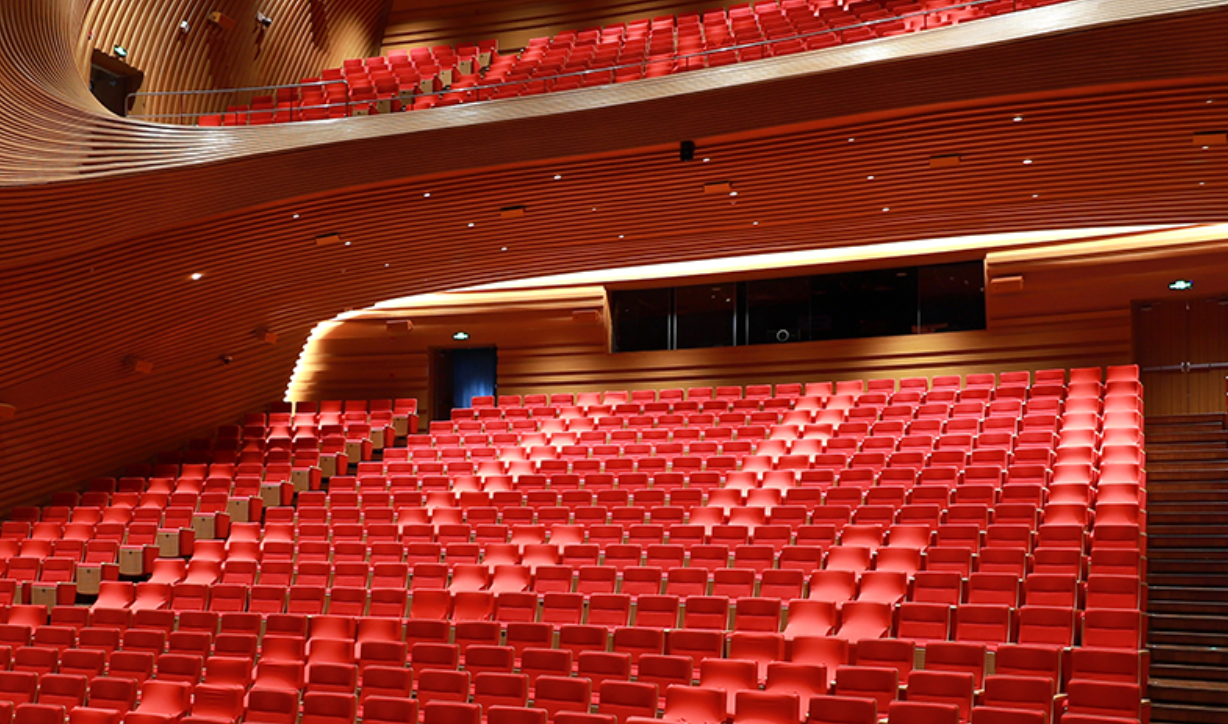
The 2021 reopening of Istanbul’s Atatürk Cultural Center provided visible proof that seating choices change operational metrics. The redesign emphasized clearer sightlines and wider aisles, reducing dwell time at intermission and simplifying crowd control. Facilities that matched seating geometry to program type reported easier staffing and faster turnovers afterwards. This is practical evidence: seating decisions change how a building is used day-to-day.
Common mistakes venues still make
Planners often assume more seats equals more revenue. That error ignores service speed and user comfort. Overcrowded rows harm ergonomics and increase complaints; overly generous seat pitch reduces capacity without delivering proportional gains in satisfaction. Another mistake is choosing a single seating type for diverse programs. Retractable seating that supports a flat-floor setup can be essential for multipurpose halls. Simple mismatch between program and seating type creates ongoing operational friction.

Operational checklist for user-centred seating
Adopt a compact checklist during specification. Include sightlines verification, seat comfort standards, and cleaning access. Confirm the row spacing supports quick exits and that aisle geometry meets local egress rules. Evaluate acoustics in tandem with seating—materials and seatback profiles matter for sound reflection. Also consider maintenance: durable upholstery and modular components reduce long-term downtime.
Supplier selection and on-the-ground value
Choose partners who demonstrate case-level experience with both theatre layouts and multipurpose arenas. Ask for documented turn-key installations and post-install performance notes. Real installations that combine fixed and retractable seating show measurable operational benefits. Look for suppliers experienced in commercial seating who can map seat types to event schedules and staffing models.
Common errors during implementation—and how to avoid them
Teams often under-resource testing. Prototype a section and run a mock event to validate sightlines and flow. Confirm that cleaning crews can access beneath seats and that maintenance crews can remove modules rapidly. Minor oversights add hours to daily routines; correct them in the pilot phase. —A small pilot prevents repeated large corrections later.
Three golden rules for evaluation
1) Measure turnover time under realistic conditions. The single most useful metric is the average time needed to clear and reseat an audience after a show. Track it before and after any seating change.
2) Score user comfort against dwell time. Use simple surveys to correlate seat ergonomics with length-of-stay and complaint rates. Comfort that reduces complaints lowers staffing burdens.
3) Validate multi-program flexibility. Confirm that any retractable or modular seating reconfigures within scheduled windows without special tools or outside contractors.
These rules point directly to operational improvements and the type of product expertise that matters for venues. When local seating choices are aligned with user needs and operational realities, the result is a smoother schedule, happier patrons, and more reliable facilities—qualities that companies like leadcom seating supply as part of integrated solutions. —