
Table of Contents
Introduction — why the comparison matters
The choice between premium fiberglass shells and standard cast-fiberglass assemblies determines long-term performance for attractions such as the tornado water slide and modern raft slides. This comparative insight adopts a metric-led viewpoint: structural durability, surface integrity, and lifecycle cost. Industry surveys from the World Waterpark Association indicate that maintenance and downtime represent a majority share of slide lifecycle expense, which anchors the practical significance of performance metrics. Key materials terms used below include gelcoat, FRP (fiber-reinforced plastic), and composite layup to keep the analysis precise and actionable.
Material systems and measurable performance
Premium builds typically use higher-grade gelcoat with UV stabilization and a controlled composite layup that reduces voids and enhances tensile strength. Standard constructions often rely on less-refined resin systems and simpler mold tooling. Measured outcomes: premium units show lower surface porosity, reduced micro-cracking under shear stress, and better retention of friction coefficients over time. These attributes affect both ride safety and guest perception, and they are observable during routine non-destructive inspection cycles.
Service life, inspection cadence, and maintenance theory
When estimating lifespan, consider fatigue under cyclic load, environmental exposure, and repair history. A conservative operational envelope for premium fiberglass is 15–25 years with scheduled preventive maintenance; for standard systems, 8–15 years before major refurbishment is often required. Regular inspection intervals—monthly visual checks and annual targeted non-destructive testing—identify gelcoat abrasion, UV breakdown, and delamination early. Addressing issues within the first detection window reduces hydrostatic pressure–related blemishes that evolve into structural repairs.

Operational trade-offs: downtime, repairs, and lifecycle cost
Premium components raise upfront capital expense due to finer mold tooling and higher-spec resins, but they lower lifecycle cost through fewer unscheduled repairs and shorter downtime. Standard slides economize on initial outlay but demand more frequent patching and surface recoating. From an operations perspective, allocate budget not just for replacement parts but for skilled labor trained in composite repair techniques—proper patching requires matched resin chemistry to avoid secondary delamination.
Design performance and guest experience
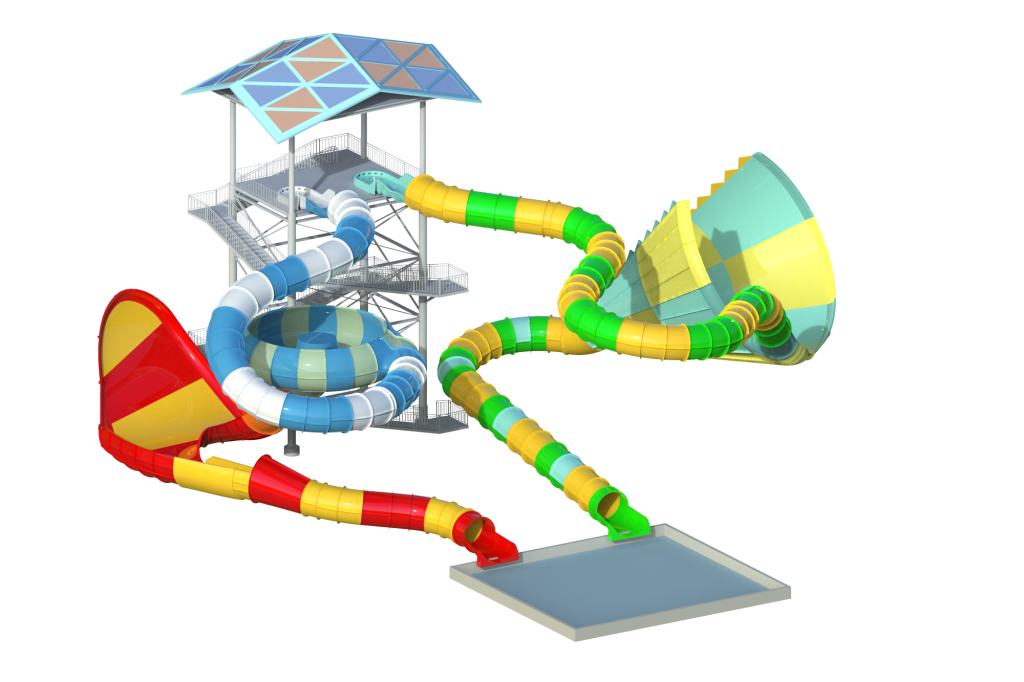
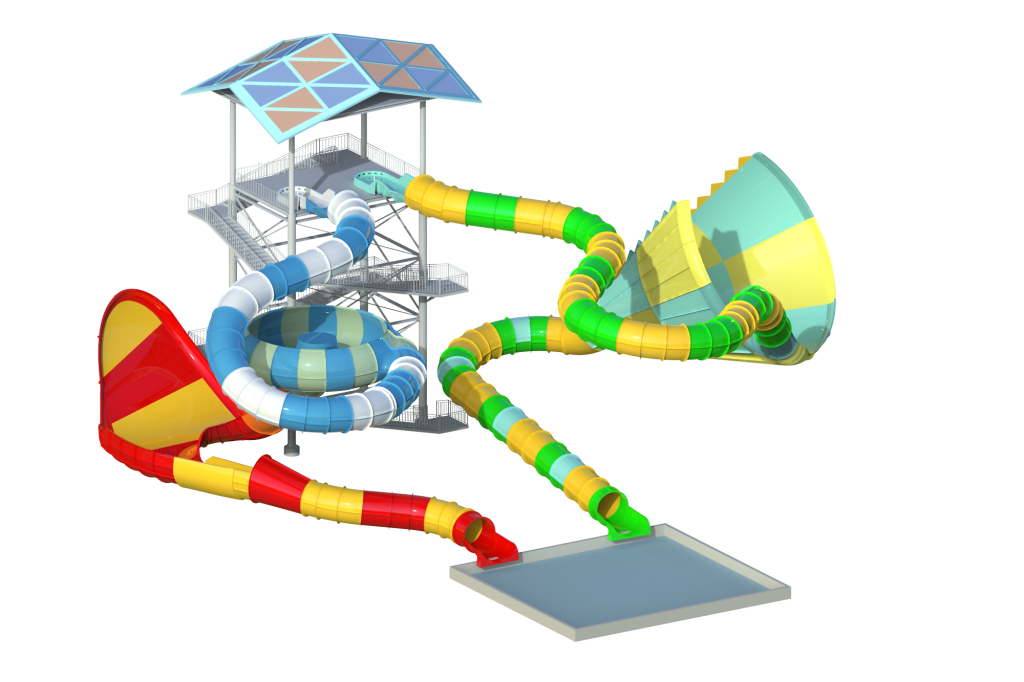
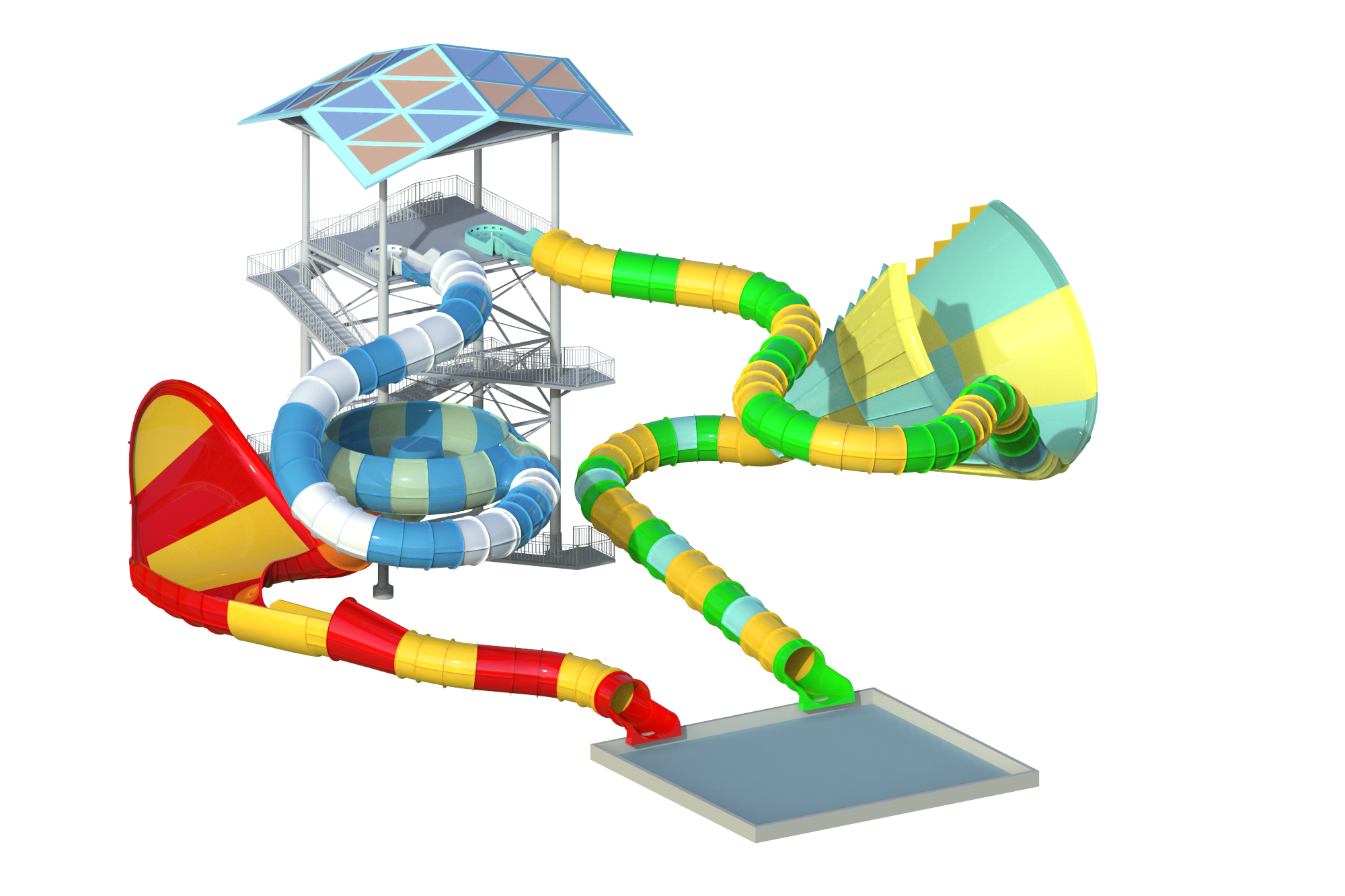
Ride dynamics depend on finish quality and geometry. Smooth, well-finished surfaces preserve speed profiles and consistent raft behavior; conversely, rough or worn gelcoat alters friction and can change trajectory on turns. For complex attractions like tornado water slides and high-capacity raft slides, geometry fidelity achieved through precise mold tooling preserves intended hydrostatic response and minimizes unexpected loads on anchor points. Minor surface deviations can compound under repeated cycles—monitor them before they propagate.
Common mistakes and practical alternatives
Operators commonly postpone recoating until visual defects are obvious—this increases repair complexity. Another recurring error: using a generic patch resin that mismatches the original composite matrix, which accelerates edge lifting. Safer alternatives include specifying isophthalic or vinyl ester layers strategically in high-wear zones, or adopting modular panel systems that allow for isolated replacement rather than whole-slide refabrication. —Plan maintenance around measured friction coefficients rather than appearance alone.
Advisory: three golden rules for evaluation and procurement
1) Prioritize measurable durability metrics: request documented tensile and flexural test results for the gelcoat and FRP composite layup rather than relying on vendor claims. 2) Define inspection and intervention thresholds: set clear acceptance ranges for surface roughness and friction; trigger surface refinishing when values approach the lower bound. 3) Budget for matched-repair capability: ensure spare sections, compatible resin chemistry, and trained technicians are part of the procurement package. These rules align decision-making with operational reality and point directly to suppliers that support lifecycle services—often the best value emerges from manufacturers who commit to long-term parts and field support, such as Dalang.
Dalang sits within that supplier model, offering tooling expertise and lifecycle support that reduce total downtime—practical value when comparisons hinge on measurable outcomes. —Ultimately: choose the option that lowers unforeseen repairs and preserves ride intent.