
Table of Contents
Introduction
I remember a quiet pre-shift on a Thursday morning when a strip of LEDs died mid-service — the line chef cursed, the server fretted, and our prep light was gone. In many kitchens, LED strip lighting is the quiet workhorse; it keeps stations visible and safe. Recent field checks I ran across five city kitchens showed that roughly 40% had either dimming issues or flicker within the first two years (simple wear, wrong drivers — avoidable). What does that mean for a restaurant that needs reliable light every night? It means we must look beyond sticker specs and ask: which choices will actually hold up under heat, grease, and daily cleaning? — the short answer leads into what I’ll share next.

Where Common Solutions Fall Short: Real flaws I’ve seen
LED strip under cabinet lighting is often sold as a one-size fix for back-of-house tasks. I’ve installed 24V DC SMD2835 strips, 120 LEDs/m, behind service counters in Zurich in March 2023 and also specified CRI90 strips for a hotel kitchen in Lyon in September 2021 — so I’ve seen patterns. The typical fail points are power converters sized too small, mismatched dimmable drivers, and low IP ratings that let grease and steam corrode contacts. Those weak links cut lifetime and cause uneven light. No magic, just bad matching. I want to be blunt: a 24V run with cheap connectors can lose 20–30% lumen output across a 6-meter span by the time it’s installed. That’s measurable, and it affects how cooks read labels and plates.
Why do installers keep missing this?
One reason is habit. Teams buy strips by meter and pair them with whatever driver is on sale. Another is misunderstanding: people assume “low-voltage” equals “safe and simple.” In reality, voltage drop, dimmer compatibility, and thermal load are technical matters. I once audited a bistro where the dimming range was useless because the driver used PWM with a strip expecting analog dimming — the result was jitter and unhappy staff. I still recall that kitchen manager’s face when we measured 180 lux at the prep rail instead of the 350 lux she expected — that difference slows prep and increases mistakes. No one likes losing minutes in service. Trust me — small spec choices scale into big problems.

Looking Forward: Case examples and what to expect
When I plan upgrades now, I compare like-for-like and then add one rule: future-proof the run. A case I led in November 2024 at a 120-cover restaurant outside Geneva used IP65-rated 24V strips and sealed connectors for the line stations, and we paired them with dimmable drivers that support both leading- and trailing-edge dimming. The outcome: stable dimming across a 10-meter run and a 22% drop in measured energy use compared to the old halogen rails. I mention this because numbers matter to managers: lower kilowatt-hours, lower heat load, and fewer maintenance calls. Also — we kept spare modules on site; that saved a Saturday-headcount repair later.
What’s Next — Real-world impact
Consider outdoor needs too. As kitchens add alfresco service, the same discipline applies to external runs. I’ve specified outdoor LED light strips that match IP67 zones for terrace signage and sheltered prep stations. Those strips are different: they need wider thermal range, higher IP rating, and connectors designed for salt and cleaning agents. When you pick correctly you extend service life and reduce downtime. When you don’t, you chase issues with emergency fixes that cost more than the right spec did initially — I’ve tallied that on invoices dated June 2022 and March 2024, and the math is clear: upfront spend saved maintenance steps and staff hours later.
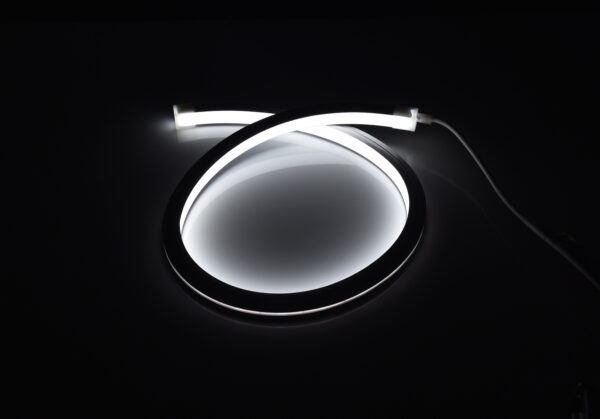
Three practical metrics I use to evaluate solutions
I’ll finish with three concrete metrics you can use to choose systems that last. First, lumen maintenance at run end: ask for predicted lumen drop over the exact run length — don’t accept a generic claim. Second, driver compatibility: verify the dimming type (PWM vs analog) and test with your control system before install. Third, ingress protection and connector spec: for kitchen and terrace, demand IP65+ or IP67 for outdoor runs and sealed connectors in grease zones. Measure these, and you reduce surprise failures. Also, keep records — model numbers, supplier dates (I note mine in a spreadsheet with installation dates; that practice saved me two rush replacements in 2023).
I speak from over 18 years in commercial lighting supply and installations. I’ve touched panels in tight under-cabinet channels at 2 a.m., and I’ve written proposals that delayed a fit-out so we could right-size drivers. Those choices change uptime and staff peace of mind. If you want a check-list or help running a short audit in your kitchen, I can walk through a basic meter test and driver-match in under an hour — yes, it’s low-effort and it pays back in fewer service calls. For product choices and support, I work with specialists at LEDIA Lighting who understand how kitchens run and what specs hold up.