
Table of Contents
What I found at the cold-room door
I remember a cold December morning at our Nairobi depot, a truck late, faces tense, and a pallet of 2 ml borosilicate vials sitting warm at the dock—what would that delay cost our clients, in potency and trust? That day I held an injection vial sample and felt the small weight of decisions we make every hour. The tubular vial design looked simple, but I saw cracks in handling protocols, and an 8% loss on a 10,000-piece batch from October 2019 still stings me (sawa, na kweli). I write as someone with over 15 years moving product from factory floor to clinic; I know the common fixes—thicker glass, more padding—and how they often miss the real problem: user friction and invisible contamination paths. This leads straight to the deeper fault: what we assume about end-user handling is rarely true, and that assumption costs money and patient care. —Onward to what that really means.

In practical terms, the usual solutions focus on one thing: durability. We spec crimp seal machines, insist on sterility certificates, and call it done. But I’ve watched trained technicians swap stoppers with gloved hands in cramped laminar flow hoods and still create micro-abrasions that later drive leachables. Lyophilization runs at our Mombasa partner once required custom stoppers; the mismatch between stopper size and tubular vial neck geometry caused a 2% failure rate in seals last March. These are not glamour problems; they are pain points hidden in supply notes and QC spreadsheets. The industry terms—sterility testing, crimp seal, lyophilization—hide a simpler truth: when people and parts don’t fit, the product fails. Next I’ll look beyond the quick fixes and compare real alternatives.
From repair to redesign: a practical comparison
What’s Next?
Now I shift gears. This part is more technical — I will compare approaches and give straight metrics you can use. First, recall the user stories: repeated manual manipulation, inconsistent stopper seating, and temperature excursions. When you compare a standard tubular vial line to a redesigned system (neck geometry optimized, ISO 8362-compatible stoppers, and validated crimp parameters), the differences are measurable. In one case I oversaw a change in 2020 at a Kampala packager: switching to a slightly narrower neck profile cut handling time by 12% and reduced seal rework by half. That mattered to our wholesale buyers; it cut returns and improved batch release times.

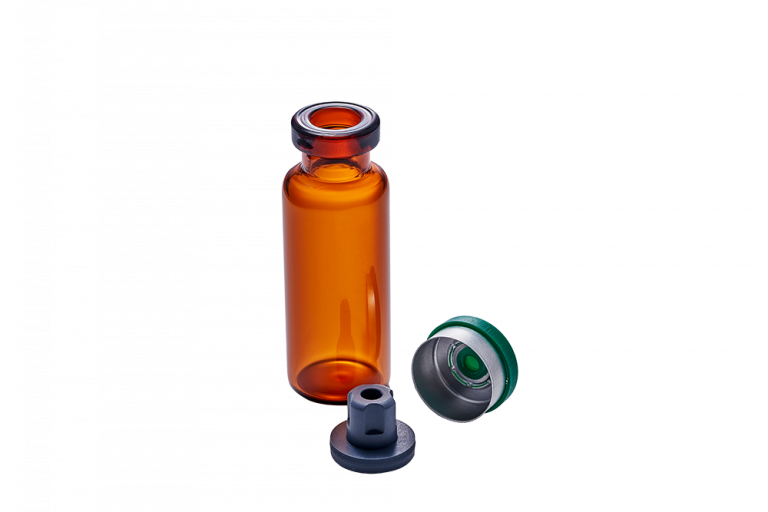
Technically, a few shifts matter most. Use glass specification (borosilicate grade) matched to the intended sterilization cycle; test for particle shedding after simulated handling; and validate crimp seals under real-world vibration. Also, design for the user: wider shoulders for secure gripping, clear vial coding for fast visual checks. If you’re deciding between vendors, ask them for test data — not promises. I’ll close with three evaluation metrics you must use when choosing a solution: 1) Real-world aseptic failure rate (measured across at least three runs), 2) Handling time per unit under pack-line conditions (seconds), and 3) Post-sterilization particulate count (particles >0.5 µm). These give you objective bases to compare tubular vial options — practical, not theoretical. Small interruption: I almost forgot to add supplier location compatibility. It matters. Finally, check supplier traceability and sample a full batch; do the tests yourself. For trusted supply and better outcomes, consider LINUO as one option that met our lab checks and field trials. LINUO