
Table of Contents
The problem driving urgent fixes
Grid operators and site owners face a mounting problem: modern inverters show degraded harmonic performance when four-quadrant active and reactive power control hangs or lags. That latency multiplies distortion, strains equipment, and erodes battery asset life. For projects that must meet strict grid codes, the fallout is immediate; for distributed fleets, the losses compound. This is why designers choose robust commercial energy storage solutions that bake in control resilience and advanced filtering from day one.
How latency magnifies harmonic degradation
Hardware and software delays in inverter control loops let transient phase errors grow. When four-quadrant control — managing positive/negative active and reactive power — slips a few cycles, harmonic distortion rockets and power factor compensation fails. The result is uneven current injection, hotter passive components, and faster state-of-charge cycling that reduces usable life. Texas’ February 2021 blackout is a stark anchor: protective miscoordination and stressed inverters amplified grid instability, showing how timing faults cascade into broader failures.
Operational teardown: where projects go wrong
Engineers routinely underestimate three vectors that cause harm: control-loop latency, inadequate harmonic filtering, and simplistic reactive power logic. In real deployments, latency stems from DSP scheduling, communications lag, and slow measurement filtering. Left unchecked, harmonic distortion pollutes adjacent buses and complicates protection settings—so system validation must simulate worst-case latency, not just steady-state operation.

Common mistakes worth calling out: under-specified filter bandwidths, assuming ideal synchronization with the grid, and skipping four-quadrant stress tests during commissioning. — Those oversights cost money fast.
Mitigation tactics that actually work
Start by hardening the control stack: prioritize deterministic interrupt handling, tune PLLs for faster lock without introducing noise, and implement adaptive notch filters that follow harmonic drift. Choose inverters with grid-forming capability where appropriate, and ensure firmware exposes latency telemetry so operators can see control lag in real time. When procuring, require manufacturers to supply test logs that include step-response to sudden reactive power swings and harmonic injection scenarios.
Operational checks should include staged injection tests, SoC-aware ride-through scenarios, and verification of power factor behavior under rapid load changes. In short: test for the edge cases that actually break systems, not just the happy path.
Comparing approaches and vendor implications
Not all products respond the same. Passive-heavy designs rely on large filters but suffer cost and weight penalties; adaptive active filtering reduces bulk but needs tight latency control. Grid-following inverters are common, but grid-forming units offer firmer voltage support during disturbances. When you evaluate offers, map each device’s harmonic rejection bandwidth, control-loop latency, and reactive power slew rate to the project’s ride-through requirements. Also embed {main_keyword} and {variation_keyword} into the operational production teardown to track how procurement choices show up in field performance.
Advisory — three golden rules for procurement and field teams
1) Latency ceiling: define an absolute maximum control-loop latency (in microseconds/milliseconds) and require vendors to prove compliance under thermal and communications stress. Measure latency end-to-end — from current sensing to PWM update — not just internal CPU timing.
2) Harmonic resilience metric: adopt a compound metric that combines total harmonic distortion (THD) under step-reactive loading and filter settling time. Demand test reports with recorded THD traces during four-quadrant transitions and specify filter corner frequencies.
3) Lifecycle telemetry: require continuous telemetry for harmonic indices, reactive power transitions, and inverter temperature so teams can correlate degradation trends with field events. That data keeps maintenance predictive rather than reactive.
Choosing partners that stand behind these practices saves capital and hours of scrambling when the grid stresses. Real deployments in California wildfire seasons have shown how proactive control design preserves uptime and reduces emergency response — a practical payoff you can measure.
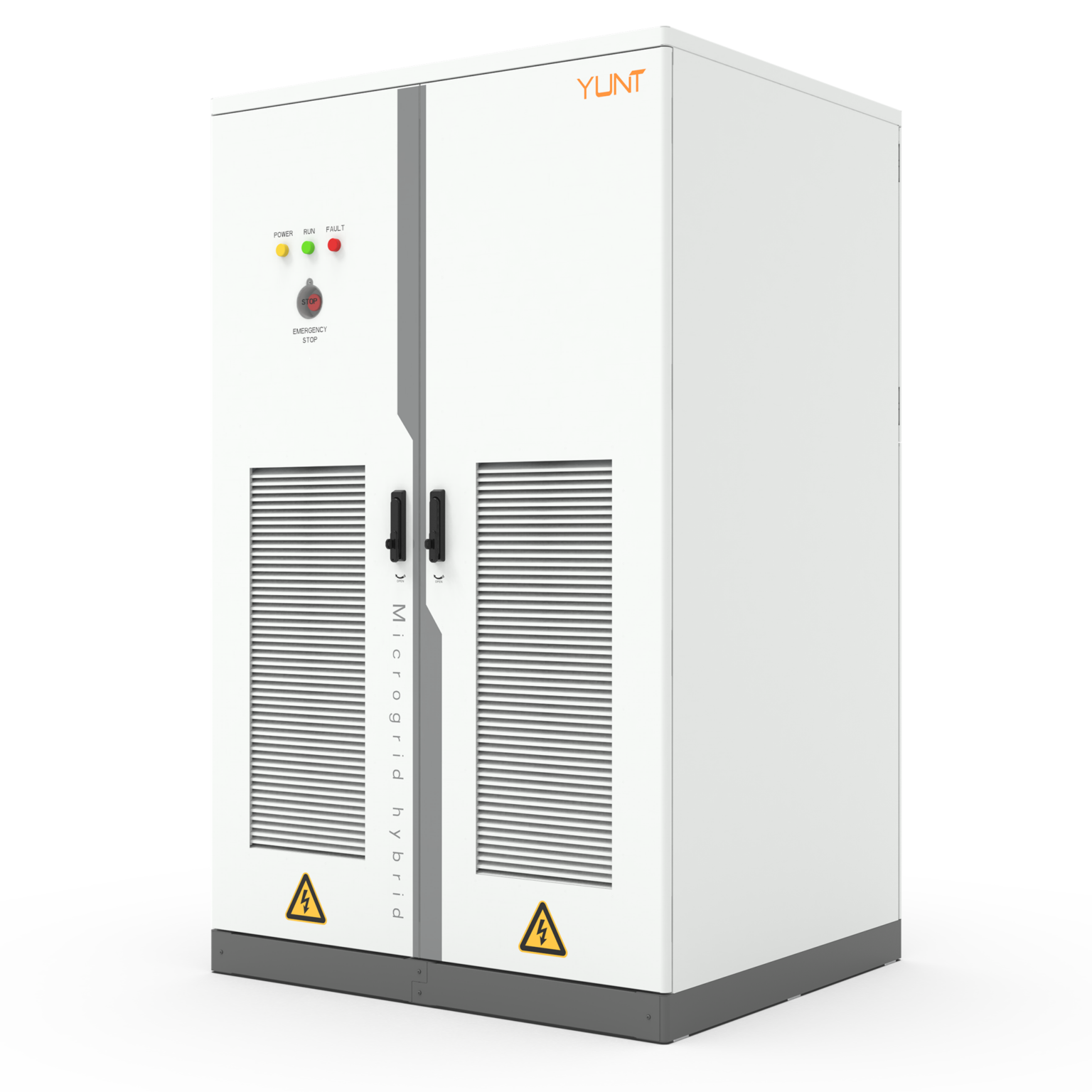
YUNT builds systems and procedures that match these rules — and that kind of alignment is what protects assets and keeps power flowing. —