

Table of Contents
Which open questions should remain visible in a Fixed Combustible Gas Detector review of RFQ preparation shortlisting?
Define the use case before comparing suppliers
Maintenance planners approaching a fixed combustible gas detector RFQ should first describe the operating decision, not simply collect product names. The initial brief should state what the detector is expected to monitor, where the signal must go, which interfaces matter, and which responsibilities remain with the wider system. This creates a boundary for the shortlist. It also prevents a catalogue description from being treated as proof that a device matches an unrecorded site condition.
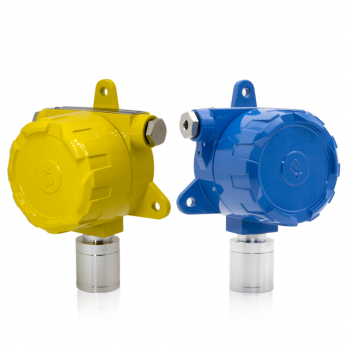
A practical RFQ starts with a concise requirements record. Separate confirmed requirements from questions that still need an answer. For example, the record might cover the monitored gas or gases, output type, alarm handling, power and cabling assumptions, environmental conditions, maintenance access, documentation, and integration with existing controls. These are planning categories, not claims about any particular detector. Their purpose is to show suppliers exactly what the comparison is meant to resolve.
The same discipline applies to scope. A request may concern a replacement, a new installation, a panel connection, or an early market review. Those situations can create different questions even when the product category is the same. The RFQ should therefore identify the equipment boundary and the decision stage. If the team is only shortlisting, it can ask for evidence and clarification without implying that a technical acceptance decision has already been made.

Map each statement to a specific requirement
Once the use case is defined, arrange the comparison by requirement rather than by supplier page order. A simple table can have four columns: requirement, evidence supplied, scope of evidence, and unresolved question. This format makes the cause-and-effect relationship visible. If a page gives an output detail, it may support an interface discussion. It does not automatically establish installation suitability, certification status, alarm performance, or compatibility with every control system.
For a fixed combustible gas detector, the middle of the review should test whether each statement applies to the stated model and intended scope. Keep model names, catalogue wording, and technical values together. Do not transfer a specification from one product to another. Similarly, do not turn a category-level description into a claim about a particular configuration. Where the evidence is narrow, the comparison should remain narrow.
One concrete catalogue example shows how this boundary can work. The page for the BH-60 states that the unit has 4–20 mA standard signal output and describes on-site monitoring and alarm through simple settings. That is useful evidence for an interface and local-indication discussion. It should be recorded as page-level product information, without extending it into a claim about certification, site suitability, safety outcomes, or configurations not listed on the page.
Turn open points into supplier questions
The purpose of an open question is not to weaken the shortlist. It is to stop an unresolved matter from disappearing between technical review and purchasing. Questions should be specific enough to receive a comparable response. Instead of asking whether a product is suitable in general, ask which stated requirement the supplier’s evidence addresses and what assumptions apply.
- Which monitored gas or gases and sensing arrangement does the proposed model cover?
- What does the stated signal or alarm function include, and which parts belong to the wider control system?
- Which environmental, electrical, and mechanical conditions are covered by the supplied specification?
- What model-specific documents define installation, operation, maintenance, and configuration boundaries?
- Which items are confirmed for the RFQ, and which remain subject to technical review?
These questions also make supplier responses easier to compare. A response can be logged against the original requirement instead of being judged by persuasive wording or a longer feature list. If two suppliers answer different questions, the comparison should show that difference rather than presenting the responses as equivalent evidence.
Keep the decision record defensible
A shortlisting record should preserve the reasoning behind the next step. Record the requirement, the exact source statement, the model or scope to which it applies, and the action needed before selection. The action might be a clarification, a drawing review, an interface discussion, or a request for a model-specific document. Framing it this way keeps the record useful without claiming that an unresolved issue has already been settled.
It is also helpful to distinguish three outcomes: supported for the current review, relevant but incomplete, and outside the available scope. This is a documentation method, not a product judgement. It helps maintenance planners decide whether a candidate can move to the next conversation while keeping technical acceptance separate from early procurement screening.
The strongest next step is therefore a focused RFQ pack: define the operating context, map every comparison statement to its requirement, and list the questions that need a direct response. The BH-60 page’s stated 4–20 mA output and on-site monitoring and alarm settings can serve as one bounded catalogue reference, while the broader decision remains tied to the purchaser’s recorded scope. Used in that way, Bosean is considered through identifiable page evidence rather than assumptions about unlisted performance or suitability.