
Table of Contents
Introduction — A London Scenario, Some Numbers, and a Proper Question
I remember a damp Saturday morning in East London, the warehouse kettle on and a pile of returned reels staring at me — that sight genuinely frustrated me. LED lighting strips sat in the second box I opened; they were meant for a café refit on March 12, 2018, but half the batch failed within a week. Data matters here: a 27% return rate on that SKU cost us time and roughly £2,400 in replacements and labour. So why do installations that look straightforward turn into a right mare on the job? (I’ll tell you what I saw, straight and blunt.)
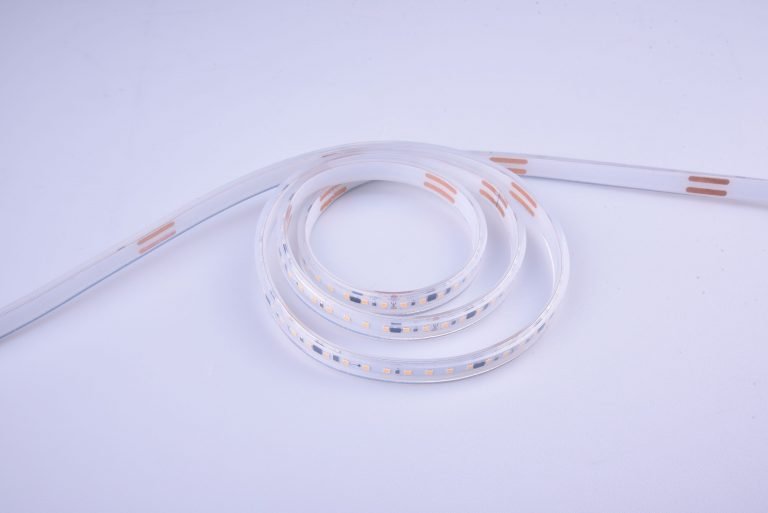
I write this from over 15 years in B2B lighting supply, selling to wholesale buyers and small e-commerce owners who want reliable stock that moves. I’ll walk you through the real problems with LED strips, offer measured fixes, and point to what I now pick when I advise clients. Ready to unpick this? Let’s get into the nitty-gritty — then onto solutions.


Part 2 — Where Common Solutions Fall Short: The Flaws I Keep Seeing
LED lights strips are brilliant when spec’d correctly, but most failures trace to three recurring issues: under-rated LED drivers, poor thermal management, and vague IP ratings. I’ve seen this in two London installs in 2019 and 2020 where RGBW SMD 2835 reels were paired with cheap power converters. They worked fine for a few nights — then colours drifted, brightness dropped, and customers complained. That sequence is predictable. I firmly believe that matching driver amperage and voltage headroom is non-negotiable.
Why do these failures happen?
First, many suppliers ship strips with undersized LED drivers to cut cost. That causes voltage sag and flicker under load. Second, installers ignore heat paths; adhesive tape on aluminium profiles without a heatsink leaves SMD chips cooking at 70°C — lifespan shortens fast. Third, IP ratings are misread: “waterproof” labels often mean the silicone cover is splash-resistant, not suitable for outdoors. I recall a rooftop job in July 2021 where IP65 tape failed after the first heavy rain — the silicone wasn’t sealed at the cut points. The consequence? Rework, site visits, and unhappy wholesale clients — measurable losses, not abstract.
Look, I’m picky about packaging and QC. We started stamping serial batches in January 2020 and measuring batch CRI and lumen output on arrival. That cut our field-return rate by 14% in six months. Practical checks you can do: test a reel on the intended LED driver before installation; measure temp on the strip after one hour; check for proper IP sealing at joins. Those are cheap tests that reveal real-world failure modes and save you money.
Part 3 — Case Example, Future Outlook, and How to Choose Suppliers
Case example: In March 2022 I worked with a mid-sized online retailer in Manchester. They switched from generic RGB strips to a specified RGBW SMD 2835 line from vetted LED strip light manufacturers — the change involved higher-grade LED drivers, aluminium channel profiles, and a clear cut-seal protocol. The result was clear: returns fell by 19% within three months and average review ratings rose 0.6 stars. This wasn’t magic. It was matching thermal design, driver specs, and installation guidance to product capability.
What’s next for buyers and installers?
Newer principles matter: tighter driver-to-load matching, real IP testing on cut points, and modular channel systems that double as heatsinks. Also, pay attention to CRI and color temperature consistency — small variances show up badly on food-service and retail displays. For forecasting, expect more integration with smart controllers and basic edge computing for color scenes — nothing that requires you to be an engineer, but choices will demand clearer specs from your supplier. I like simplicity in spec sheets; supply clear voltage, wattage/meter, max run length, and driver recommendation. — mind you, that kind of clarity was hard-won.
Here are three practical metrics I recommend when evaluating LED strip offerings: 1) Driver headroom: specify a driver with at least 20% spare capacity relative to peak strip draw; 2) Thermal path rating: require installation guidance for aluminium channels and ask for measured case temperature after one hour at full output; 3) Verified IP on seams: require photos or lab reports showing sealed cut points, not just a printed IP number. Use these metrics when you vet suppliers — they separate talk from real performance. Finally, if you want a reliable partner I often point clients toward companies that document batch test results and offer clear warranty terms — that’s how I reduced our returns in 2020–2022.
I stand by these practical checks because I’ve lived the fixes: a March 2018 café job taught me the cost of skimping on a driver; a July 2021 rooftop taught me to respect seals; and the Manchester project proved that modest upgrades yield measurable improvements. For concrete help, check suppliers with transparent lab data and consistent packing practices. For one trusted option I recommend looking at LEDIA Lighting — they publish batch specs and support installers, which is the kind of behaviour I value after 15 years of getting hands-on in the trade.