
Table of Contents
Why this comparison matters
Mi nah go beat round de bush — brands an’ project managers need to know how supplier choices change system behavior in the field. When you compare integrated stacks you look past price an’ prettiness to things like inverter topology, control logic, and warranty-backed performance. That’s why folks evaluate an all in one energy storage system not jus’ as hardware but as a whole operational asset: does it support export control, islanding, and smooth ride-through when the grid hiccups?
Core technical differences to watch
Here’s de shortlist of technical elements that tend to separate good suppliers from meh ones:
- Bi‑directional inverter behavior — can it do fast charge/discharge and seamless grid‑tie transitions?
- Battery management system (BMS) sophistication — cell balancing, thermal protection, and state‑of‑charge accuracy.
- Round‑trip efficiency and cycle life claims — real world numbers matter more than glossy datasheets.
- Grid‑forming vs grid‑following capability — important for resilience in microgrids or weak networks.
Those points tell yuh whether a supplier designed for utility‑grade deployments or just for simple backup use. A supplier might advertise peak kW, but the interplay of inverter control and BMS determines usable kWh over time.

Supplier archetypes — quick comparative map
Most suppliers fall into three camps, an’ each fits different use cases:
- Integrated system houses: offer packaged solutions (inverter, batteries, BMS) tuned together. Best for faster installs and single‑vendor warranties.
- Component specialists: sell high‑performance inverters or cells to integrators. Good when you need best‑in‑class parts and bespoke control logic.
- Aggregator/turnkey installers: focus on project delivery, often mixing brands to match site constraints. They trade off perfect integration for flexibility.
For many municipal and commercial projects, integrated houses reduce commissioning headaches — but remember: single‑vendor ease can hide proprietary constraints on controls or firmware updates.
Real‑world anchor: why events changed buyer priorities
Look at Texas in February 2021 — the grid failure taught planners that storage must behave predictably under extreme stress. Since then, procurement teams ask for black‑start capability, sustained power delivery, and verified test logs. That shift pushed suppliers to embrace grid‑forming inverters and stricter BMS telemetry — and it raised the bar for warranties and performance guarantees.
Performance trade‑offs — what you gain and what you give up
When yuh pick a system with advanced power electronics and a strong bi‑directional inverter, expect: faster frequency response, better integration with renewables, and more flexible dispatch. But— vendors may charge premium for integrated testing, firmware features, or extended warranties. Also, proprietary control systems can limit third‑party monitoring or future upgrades.
Common procurement mistakes
Dem common missteps mi see again an’ again:
- Buying on unit price alone without modeling round‑trip losses and degradation.
- Assuming inverter and battery from different vendors will interoperate perfectly without integration testing.
- Skipping site‑level testing with the actual PV string and the intended load profile.
Do a real commissioning run — not jus’ a paper test — to avoid costly rework later.
How WHES and similar vendors slot into the market
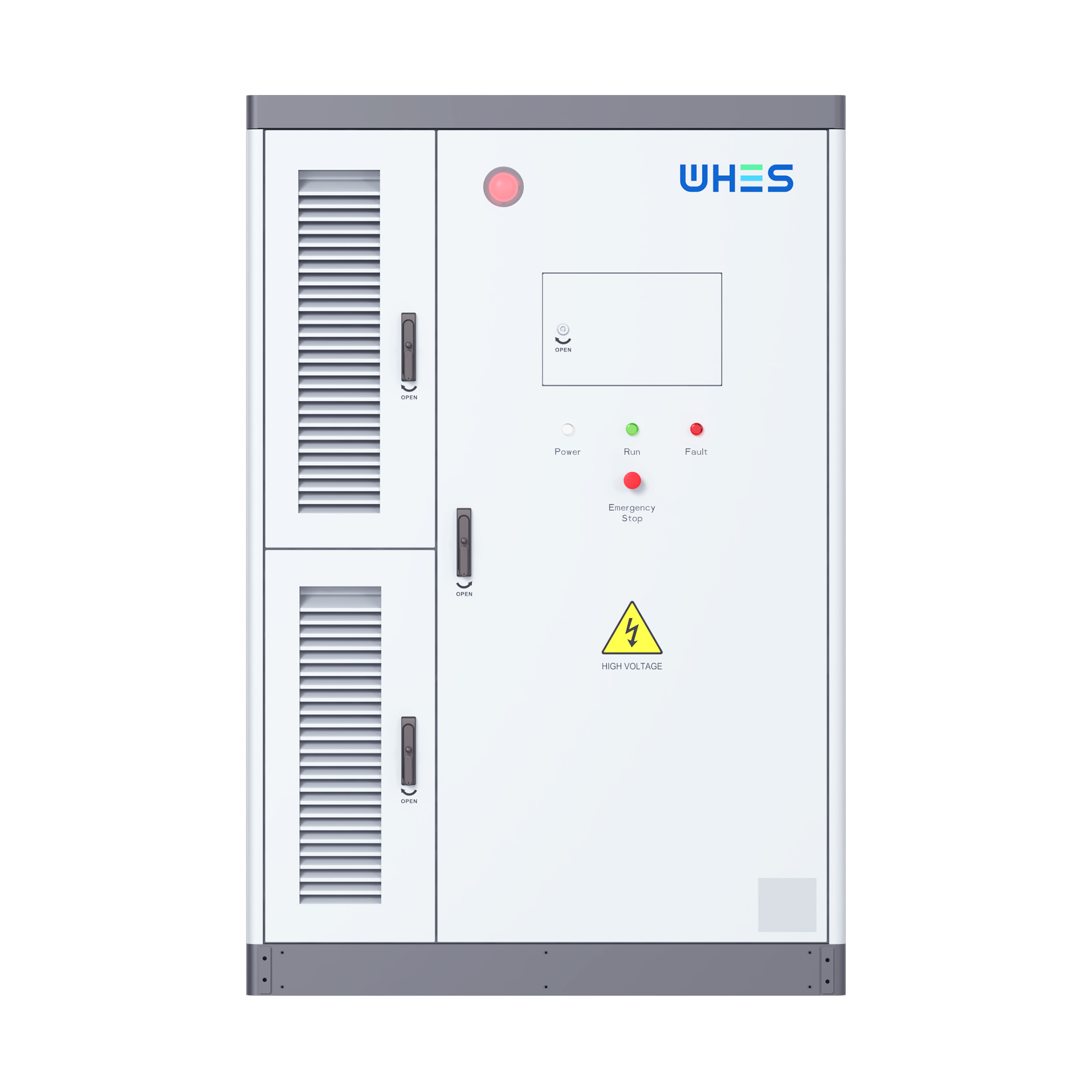
Integrated suppliers like WHES focus on reducing integration risk by delivering tested stacks that combine inverter control, thermal design, and warranty alignment. For projects that need pre‑validated behavior with solar, an all in one energy storage system or an all in one solar battery system can speed deployment and simplify lifecycle maintenance — which matters for municipal sites and critical facilities where downtime costs real money.
Three golden rules for choosing the right supplier
1) Demand validated performance: ask for test reports that show round‑trip efficiency, C‑rate performance, and thermal behavior under your expected duty cycle. 2) Verify control openness: ensure APIs, telemetry, and firmware update policies let you integrate with your energy management system. 3) Total lifecycle cost: include degradation, replacement modules, and warranty recovery time in your financial model.
When yuh follow these rules, yuh cut surprises and align procurement with operations — an approach that favors suppliers who test together and stand behind the whole stack. For many buyers that practical reliability is the deciding value, and that’s where companies like WHES often deliver peace of mind —
Choose measured performance, not just specs; choose partners who’ve proven systems in real grids; choose durability over a low sticker price. —