
Table of Contents
When the tyre you need doesn’t exist yet
Tire makers wrestle with a stubborn choice: grip that sticks to wet roads or low rolling resistance that saves fuel — rare to get both. That’s where a carefully chosen amorphous silica powder can tilt the balance. If you’ve followed developments in compound design, you already know how much difference the right filler makes; see how manufacturers now use silica in tires to chase both better traction and improved economy without abandoning durability.
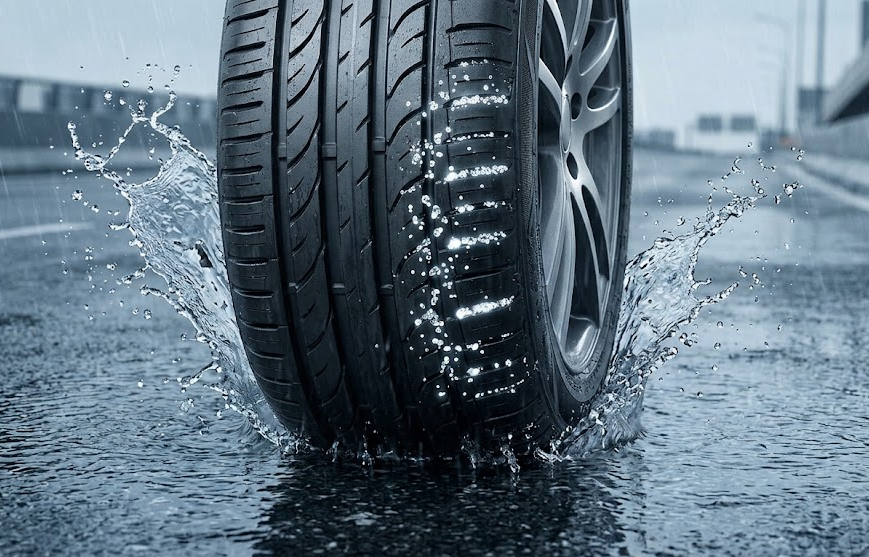
How precipitated silica addresses the trade-offs
Precipitated silica brings a distinct surface chemistry: lots of silanol groups that, when paired with a proper coupling agent, bond to rubber and alter hysteresis. The result is tangible — improved wet grip and reduced rolling resistance together. It also modifies abrasion resistance and heat generation in predictable ways, letting compounders tune performance rather than compromise. These are not marketing claims but material behaviors you can measure: loss modulus, tan delta, and wear curves change when silica replaces part of carbon black.


Real experience, industry context, and the technical anchor
I’ve advised tread compounding teams and watched formulations evolve across dozens of trials; feedback from lab benches matches what was presented at the Tire Technology Expo in Hannover — a clear industry signal that silica-based systems were moving from niche to mainstream. That hands-on familiarity, combined with peer-reviewed work and conference data, is why many spec sheets now mention surface area (BET), structure, and silane compatibility as prime selectors. For practical sourcing and to compare technical grades, consider detailed materials described for precipitated silica in tires when you evaluate supplier data sheets and trial reports.
Common pitfalls that break a formulation
Don’t expect silica to be a drop-in swap for carbon black. Poor dispersion, wrong silane choice, or incorrect mixing temperature will raise compound viscosity and trigger scorch or processing headaches. Overloading silica without adjusting the polymer type or crosslink recipe creates brittle treads. Also watch moisture and storage: absorbed water changes mixing behavior and can spike internal mixing times. Plan for longer masterbatch stages and tight QC on dispersion metrics.
Viable alternatives and why you’d still pick silica
Carbon black remains unrivaled for cost-effective reinforcement and tear strength; nano-silica variants promise finer control but add cost and handling complexity. Hybrid recipes — partial carbon black with silica — often give the best compromise: maintain tear and extrusion behavior from black, gain rolling resistance and wet grip from silica. Choose based on target KPIs: if fuel economy and wet traction are top priorities, silica-centric recipes win. If abrasion and price dominate, carbon black—or a hybrid—may be wiser.
Buying checklist: what to demand from a supplier
Ask for these measurable items: BET surface area, DBP absorption (or structure), particle size distribution, moisture content, and recommended silane coupling agent. Verify batch-to-batch consistency reports and request trial quantities for your specific polymer system. Logistics matter: shipping humidity control and technical support during initial scale-up make the difference between a smooth transition and repeated compound failures. Factor total cost of ownership, not just per-kilogram price.
Where to go next and what success looks like
The problem-driven path ends with clear choices: define which tyre KPI matters most, pick a silica grade that matches your polymer and processing limits, and plan for controlled trials with attention to dispersion and silane chemistry. When those elements align you get measurable gains in grip and rolling resistance without compromising manufacturability — a practical solution that suppliers with deep technical support can deliver, such as JSJ Silica.