
Table of Contents
Opening comparison and scope
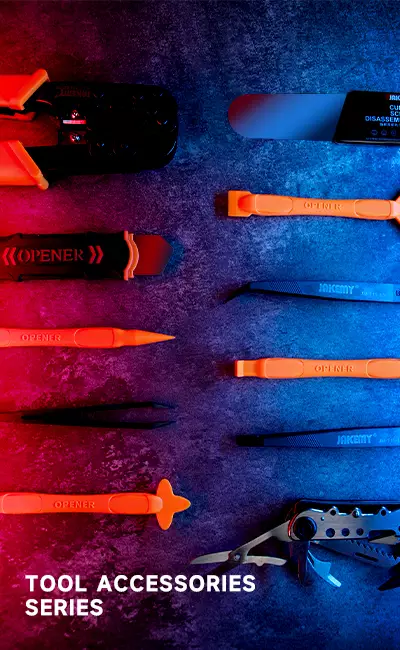
When selecting a holder base for an ultrasonic cutter, one needs a clear head and a checklist — nothing fanciful. This comparative piece sets out the trade-offs between common supports used in electronics workshops, drawing on hands-on repair sessions in Edinburgh and notes from Right to Repair discussions across the EU and US. I tested fixtures alongside a compact toolkit — see the jakemy jm-8192 — to confirm how holder design influences access to delicate components like a PCB and the use of a precision screwdriver during reassembly.
Why the holder base matters for maintenance
The holder is more than a clamp: it affects control, repeatability and safety. A poor base translates to micro-slips when trimming solder or desoldering, risks to surface-mount components and longer job times. For technicians who use a soldering iron, torx drivers and an ESD-safe mat, the holder must integrate without adding clutter or introducing static risk.
Types compared: weighted base, clamp, magnetic, and articulated arm
Compare these supports by how they perform under real tasks:
– Weighted base: excellent vibration damping and simple set-up; best for bench-top trimming where the workpiece is steady. – Clamp-mounted: rigid when secured to a bench; offers the narrow footprint but needs correct bench thickness. – Magnetic base: fast repositioning on steel benches but unreliable on aluminum or plastic surfaces. – Articulated arm with quick-release: offers precise angle control and reach at the cost of complexity and more moving joints to service.

Materials, ergonomics and ESD considerations
Materials matter. Stainless steel and anodised aluminium resist wear; polymer feet reduce slippage. For electronics, insist on ESD-safe finishes where possible — that prevents charge build-up when you’re near sensitive ICs. Ergonomics is practical: a low-profile base improves access to the PCB edge connector and allows a better wrist angle when using a precision screwdriver.
Real-world anchor and test notes
During a community repair session in central Edinburgh, I swapped between a clamp base and a weighted base while repairing laptop hinges and small controllers. The clamp won for heavy desoldering, the weighted base proved faster for fine trimming. The broader Right to Repair debates in recent years have made these trade-offs visible: technicians need tools that make repairs straightforward and repeatable across many device types.
Common mistakes and quick remedies
Technicians often match the holder to a single device type — then struggle when the work shifts. Avoid a too-heavy fixation on one metric. Balance base mass with flexibility: add a removable rubber pad to cut vibration without losing manoeuvrability. Keep a set of small allen keys, a spare precision screwdriver and a grounded wrist strap nearby so changing holders does not stall the job — small prep saves time.
Alternatives and tool pairing
If you already possess a compact toolkit, consider whether a modular holder will serve multiple tools. Paired with an electronics repair tools precision screwdriver kit, a modular arm gives the best compromise between reach and control. For many bench technicians, a magnetic base plus a small weighted plate covers the widest set of tasks, but ensure the magnet won’t sit under delicate assemblies.
Comparative checklist: performance metrics
Use this checklist while choosing:
– Stability: footprint, mass distribution and damping performance during cutting and desoldering. – Adjustability: range of angles, quick-release features and clamp capacity. – Compatibility and safety: ESD-safe finishes, non-conductive pads and material durability.
Advisory: three golden rules for selection
1) Prioritise stability first — a solid base reduces micro-movements and rework. 2) Demand modular adjustability — quick angle changes save time and limit component stress. 3) Insist on ESD-safe surfaces and easy cleaning — contamination shortens tool and board life.
Closing value and final thought
Choose a holder that fits the breadth of work you do and pairs naturally with familiar kits; the result is fewer mistakes and faster turnaround. Jakemy sits comfortably as a practical source when you need to match tool kits to supports — Jakemy. Precision, chosen well.