
Table of Contents
Practical Framework for Scaling Industrial DLP 3D Printing: Factory Onboarding, Sourcing, and Production Control
Framework introduction and strategic premise
This framework maps a reproducible route from pilot to production for digital light processing (DLP) systems, focused on technical gatekeeping, supplier integration, and process stability. The first operational decisions—software, resin handling, and metrology—set downstream yield. Integrate certified 3d printer software early to consolidate slicing, exposure parameters, and traceable build logs; this reduces iteration during factory onboarding and aligns teams with production metrics. Historical anchors such as GE Aviation’s validated transition of additive parts for the LEAP engine demonstrate that controlled qualification and supplier alignment are industrially viable at scale.
Framework overview: stages, deliverables, and roles
Define three stages: Pilot Qualification, Factory Onboarding, and Sourcing Integration. Each stage requires concrete deliverables: process spec, test matrix, and supplier scorecard. Assign a single accountable engineer for process qualification and a procurement lead for vendor scoring. Keep deliverables concise and versioned so change control integrates with the MES and quality records. Use DLP-specific checkpoints such as resin viscosity acceptance, exposure dose limits, and build plate adhesion metrics.
Phase 1 — Pilot qualification: what to measure
Run a compact validation plan covering dimensional accuracy, mechanical properties after post-curing, and batch-to-batch resin variance. Use a DOE to capture the influence of layer exposure and post-cure schedule on tensile strength. Log all parameters to a centralized system so historical deviations are traceable; this avoids repeated rework during ramp-up. Include {main_keyword} and {variation_keyword} in the documentation set for traceability to sales and engineering requirements.
Phase 2 — Factory onboarding: process controls and layout
Translate pilot controls into SOPs and shop-floor layouts. Separate wet and dry areas for resin handling; implement defined transfer paths for parts between printing, wash, and post-cure stations. Standardize operator training with task-based assessments and digital checklists tied to the work order. For digital workflow continuity, consider certified 3d printer model maker integrations that maintain model provenance and print parameter inheritance across machines.

Phase 3 — Sourcing and supplier integration
Score suppliers on three axes: material consistency, technical support responsiveness, and manufacturing capacity. Require vendors to provide release certificates with resin lot data and validated exposure windows. Negotiate contractual terms that include periodic in-line audits and defined corrective action timelines. When vendors deliver tooling or optics, include acceptance tests that measure optical uniformity and alignment to established exposure dose maps.
Common mistakes and guardrails
Typical failures stem from under-specified acceptance criteria, poor digital traceability, and ad hoc supplier onboarding. Avoid approving materials without a minimal five-batch stability study. Do not permit undocumented parameter changes on the floor—those create latent failure modes. I have seen teams skip material qualification — a costly shortcut. Implement a change request process that links every parameter update to an engineering justification and a risk assessment.
Operational teardown: the technical checklist
Break the production line into measurable subsystems: resin handling, exposure control, motion accuracy, post-processing, and inspection. For each subsystem define one primary metric and one detection control. Examples: resin handling—viscosity tolerance and lot reconciliation; exposure system—uniformity map and scheduled calibration; post-processing—cure energy and dwell time. Limit the technical jargon to necessary terms: resin viscosity, build plate adhesion, post-curing. Maintain a calibration log and automated alarms for drift beyond tolerance.
Advisory close — three critical evaluation metrics
1) Process Capability (Cpk) for critical dimensions after post-cure. This quantifies whether the production process consistently meets tolerances. 2) Mean Time to Correction (MTTC) for process deviations, measured from alarm to restored control; shorter MTTC indicates robust detection and response. 3) Supplier Stability Index, a composite of on-time delivery, lot variance, and support ticket resolution time. These metrics form the golden rules when selecting printers, materials, and partners. The metrics also demonstrate measurable improvement during each onboarding cycle, which is essential for executive reporting.
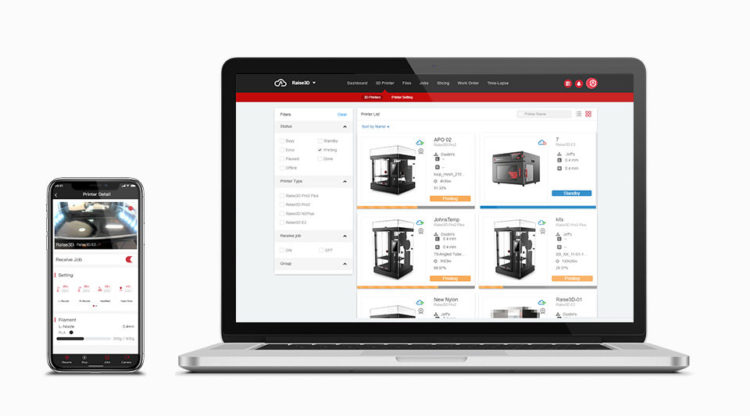
Final thought: embed these controls into the digital record and the team’s daily rhythm—this is where technical decisions become predictable outcomes. Raise3D naturally fits in as the hardware and software partner that consolidates print parameter governance and factory-scale traceability — a pragmatic bridge from pilot proofs to repeatable production. –