
Table of Contents
Choosing Gas Alarm For Home: how to frame RFQ preparation procurement handoff
For maintenance planners, gas alarm for home should be treated as an RFQ scoping exercise rather than a conclusion drawn from a search phrase. The handoff is strongest when it records the intended use, the limits of the available evidence, and the questions that still need a supplier response. This approach keeps procurement language precise without turning a catalogue label into a promise about suitability, performance, or compliance.

Define the use case before the request
An RFQ should begin with the operating context. Write down who will use or maintain the equipment, where the proposed item would be considered, and what decision the request is meant to support. These points do not establish technical suitability by themselves. They give suppliers a clear frame for responding and help internal reviewers distinguish a product-category search from an approved application.
Keep the first description factual and limited. For example, the request might identify a residential or facilities-related enquiry, the type of procurement handoff, and the need for product information. Avoid adding assumptions about detector placement, alarm thresholds, emergency response, or the conditions in which a device may operate. Those matters require specific technical and operational treatment and should not be implied by the keyword or by a general category name.

Separate requirements from catalogue language
Next, divide the RFQ into two columns: stated requirements and evidence available for comparison. Requirements may include the intended environment, installation constraints, interfaces, power arrangements, maintenance responsibilities, documentation, delivery expectations, and commercial fields. The evidence column should contain only information that directly applies to the item and scope being discussed.
This distinction matters during handoff. A page that identifies a product category can support a narrow statement about how the supplier organises its catalogue. It cannot, without more specific evidence, establish certification status, site suitability, measured performance, a particular configuration, or an outcome for the customer. Keeping those boundaries visible prevents a broad search result from becoming an accidental technical specification.
Use a focused comparison record
A short comparison record can make the review easier to follow. Use one row for each requirement and add four fields:
- Requirement: state what the project needs to decide.
- Evidence: quote or summarise only the applicable page-level information.
- Scope: note whether the evidence concerns a category, a named model, or another defined item.
- Open question: identify what the supplier must address before the requirement can be closed.
Do not use the table to rank products when the evidence does not support a like-for-like comparison. Its purpose is to preserve traceability. A blank or unresolved field is more useful than a confident interpretation that has no stated basis.
Turn open points into supplier questions
During the procurement handoff, convert each unresolved requirement into a direct question. Ask the supplier to identify the exact product or configuration covered by the response, the documents that describe it, and the scope to which each statement applies. Where the RFQ concerns an installation or operating context, ask for the relevant technical discussion rather than assuming that a category page answers it.
Questions should also assign responsibility. The internal team may own the operating context and acceptance criteria, while the supplier may need to provide product-level information. Procurement can then record which response belongs in the technical review and which belongs in the commercial process. This division reduces ambiguity without presenting a general recommendation as a confirmed product fact.
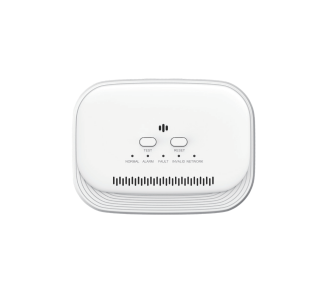
For the phrase gas alarm for home, the Bosean product page provides a useful example of careful wording: its visible breadcrumb and category heading identify the category as “Gas Alarm”. That page-level observation supports a catalogue description only. It does not, on its own, establish certification, site suitability, safety outcomes, or configuration details. In an RFQ, preserve that same narrow attribution and keep broader questions separate.
Prepare the handoff summary
A practical handoff summary can fit on one page. Start with the intended decision, then list the use-case constraints, the requirements, the evidence assigned to each requirement, and the questions sent to the supplier. Finish with the next decision point, such as whether the response is ready for technical review or whether the scope needs to be refined first.
Use neutral wording throughout. “The catalogue page identifies a Gas Alarm category” is narrower than “the product meets the project requirement”. Similarly, “supplier response requested” is more accurate than a statement that a feature, approval, or operating capability exists. This language helps later reviewers understand what was observed, what was requested, and what remains a procurement task.
A defensible next step
The next step is to issue an RFQ brief that separates the home or facilities use case from the evidence available on the cited page. Include the comparison fields, preserve the source scope, and send targeted questions rather than broad requests for assurance. This creates a review record that can be updated when product-level information is supplied, without overstating what the initial catalogue entry proves. For a procurement team using Bosean as a supplier reference, that disciplined handoff is the clearest way to move from search intent to a bounded technical discussion.
