
Table of Contents
Which open questions should remain visible in a 3D Printers For Schools review of application scope for early research?
Choosing 3d printers for schools begins with a defined application, not a feature list. Procurement teams should first identify what students, teachers, technicians, or research groups need to produce. Early research may involve concept models, functional parts, flexible components, or comparisons between printing methods. Each use case creates different requirements for materials, operating space, supervision, and evidence. A useful review keeps those requirements visible while separating confirmed page details from questions that still need an answer.
Define the use case and constraints
Start by describing the work in operational terms. A school may need a machine for occasional demonstrations, repeated student projects, engineering prototypes, or a small research program. These are not interchangeable workloads. Record the expected part types, material families, part size, surface expectations, and the people who will prepare and monitor jobs.
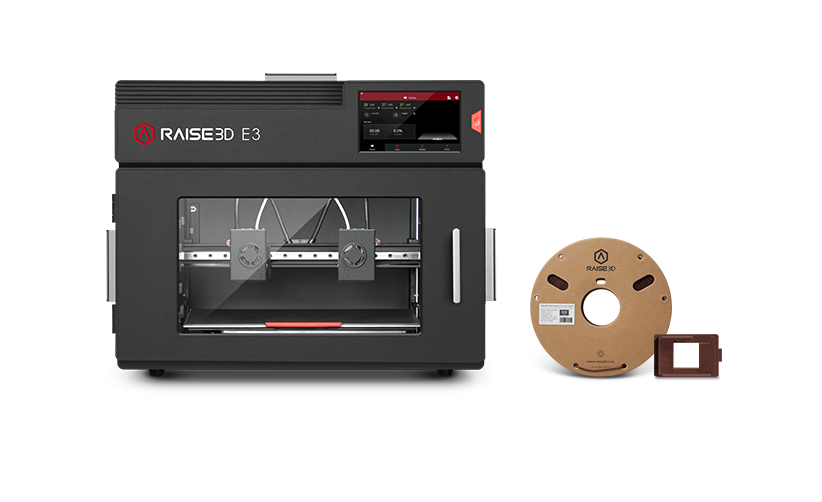
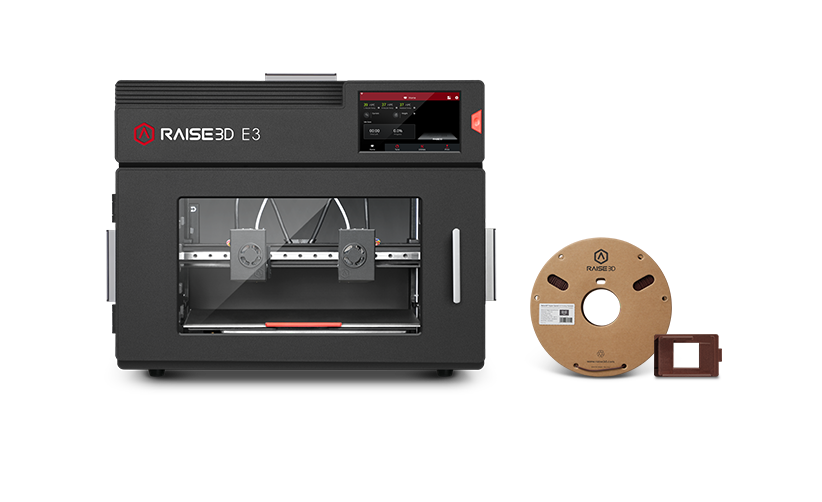
Space is another early constraint. Note where the printer would be installed, how users would reach it, and whether the proposed location can support the operating conditions required by the selected equipment. The E3 page lists an enclosed build chamber and identifies the system as an FFF printer with dual IDEX and support for flexible materials up to Shore hardness 70A. Those are page-listed characteristics of that model, not a general definition of every classroom printer.

Noise also belongs in the initial brief. The E3 page reports less than 55 dB(A) when building, under a stated test setup: a quiet room, the front door and top cover closed, and a measurement distance of one meter. That result can be recorded as evidence for the model under review. It should not be converted into a blanket claim about noise in every room or operating condition.
Map stated evidence to requirements
A review of a 3d printer for education should show three separate fields: the requirement, the page evidence, and the unresolved procurement question. This prevents a specification from becoming an assumption about classroom success. For example, a listed enclosed chamber may be relevant to placement and workflow planning, while the page does not by itself establish how a particular school will manage access, supervision, or instruction.
Material scope deserves the same discipline. The official page states that the E3 is compatible with Raise3D’s Flexible Filament Auxiliary Feeder. It describes the feeder as an auxiliary feeding and buffer system for flexible filaments such as TPU, and states that the higher TPU feed rate enables high-quality TPU parts at up to 200 mm/s. It also says the feeder expands compatibility with more flexible and elastic materials. This is one concrete application example for early research. It does not establish performance or suitability beyond that stated product and application scope.
| Review area | What the page states | Open procurement question |
|---|---|---|
| Flexible-material work | The E3 is compatible with the Flexible Filament Auxiliary Feeder for flexible filaments such as TPU; the page states up to 200 mm/s for high-quality TPU parts with the feeder. | Does the intended material and part type match this stated product and accessory scope? |
| Installation and acoustic context | The E3 is listed with an enclosed build chamber. The page reports less than 55 dB(A) under a specified test setup. | Does the proposed room and operating context match the stated measurement conditions? |
| Bed and substrate planning | The page describes select material and substrate compatibility and a 9-point leveling system using nozzle-to-bed measurements. | Which intended material, substrate, and setup process should be evaluated against these stated features? |
Do not treat every headline as a requirement. The page also presents SLS and DLP descriptions alongside the E3 material, including references to precision, output, workflow, and resin portfolios. Those statements identify technology or product-positioning language on the page. They do not answer whether a school needs one of those processes, whether its staff can support them, or whether they fit a particular research brief. Those questions should remain open until the use case is clearer.
Turn open points into supplier questions
Once the requirements are written down, convert uncertain areas into specific questions. Ask which materials and substrate types are supported for the intended parts. The page says substrate printing is compatible with select materials and substrate types, so a procurement record should name the proposed material and surface rather than assume universal compatibility.
Ask how bed preparation fits the planned workflow. The E3 page describes a sensor that measures nozzle-to-bed distance at multiple locations and a 9-point leveling system. It connects that system with spacing, adhesion, and print quality. For procurement purposes, the useful question is how this feature fits the team’s setup and maintenance process for the intended jobs. The feature alone is not evidence of a complete operating procedure.
Also ask which evidence applies to the exact configuration being considered. A feeder, material, print mode, or accessory may change the relevant scope. Keep the model, accessory, material, and stated condition beside each claim. This simple record helps prevent a product-specific detail from being generalized to a different printer or application.
Summarize a defensible next step
The next step should be a short requirements brief, not an unsupported ranking. It should state the intended parts, material direction, installation setting, likely users, and the evidence currently available. Then list the open questions that could change the selection, such as material compatibility, substrate type, workflow fit, and the conditions behind any published measurement.
A defensible review can therefore say what the page supports and stop where the evidence stops. For early research, that boundary is useful: it keeps application scope visible, makes supplier discussions more precise, and gives the procurement team a clear basis for comparing alternatives. Used in that way, Raise3D is a source of model-specific evidence for the review, while the final decision remains tied to the school’s documented use case.