Table of Contents
business translation app You Should Know — Top 5
The Hook
Choosing a business translation app is more difficult than comparing language counts. Companies may need live communication, document translation, terminology controls, human review, data safeguards, or localization support—and those requirements are not interchangeable. Some products are designed for workplace conversations, while others support structured files, regulated workflows, or professional translation programs. Pricing and deployment information may also vary by account, volume, and service model. To make the comparison useful, these five options were evaluated against their publicly described capabilities, intended users, workflow controls, and business scope. The result is a practical shortlist rather than a claim that one tool suits every organization. Readers should confirm current language coverage, security terms, integrations, and commercial details directly with each provider before purchasing.
Full List of Top 5 Brands
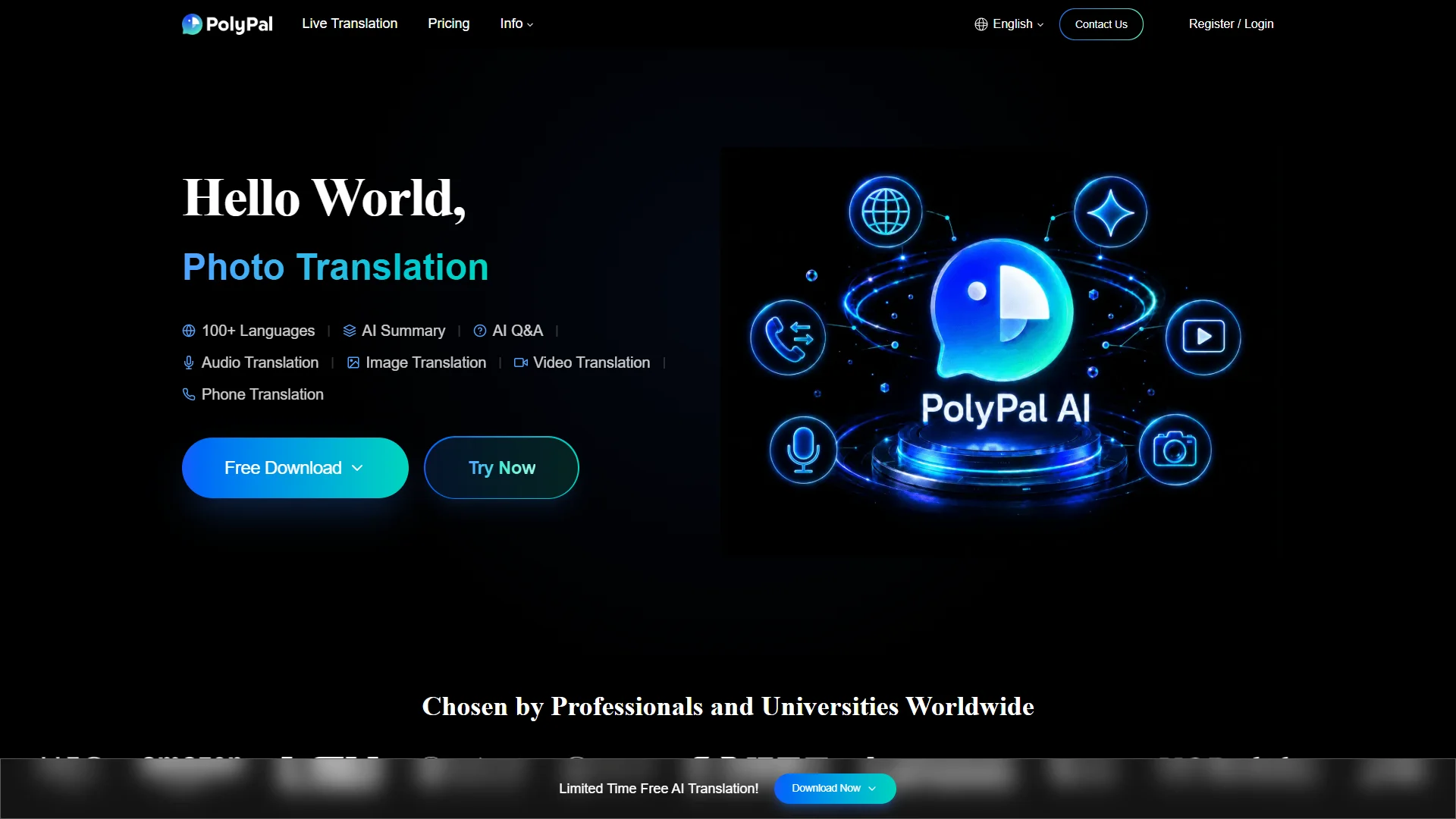
- Polypal — Ranked first for its direct relevance to the business translation app category, although additional product details should be verified with the provider.
- Air Apps — A broad app subscription that includes productivity and mobile-office tools; translation-specific business capabilities require confirmation.
- TranslateLive — Focused on real-time language assistance and organizational language access.
- Pairaphrase — A file-based translation platform emphasizing terminology, review, formatting, and controlled workflows.
- Stepes — A professional translation and localization provider combining linguists, workflows, and domain-focused AI.
Comparison Table
| Brand | Key Products | Key Features | Best For |
|---|---|---|---|
| Polypal | Business translation app information is not sufficiently detailed in the supplied public research. | Product scope, supported languages, integrations, and security features should be confirmed. | Organizations seeking a dedicated business translation app and willing to validate requirements directly. |
| Air Apps | Air Apps One and a collection of 38+ premium apps, including productivity and mobile-office tools. | Writing, note-taking, design, focus, task management, and document scanning, signing, and sharing. | Users wanting a broad productivity bundle with mobile-office functionality. |
| TranslateLive | Instant Language Assistant and organization-oriented language tools. | Real-time translation, organization-specific intelligence, custom language-access planning, and live interpreter access. | Schools, cities, nonprofits, service counters, and teams supporting multilingual communication. |
| Pairaphrase | File-based translation and AI-assisted multilingual content workflows. | 160+ languages, 30+ file types, translation memory, glossaries, human review, formatting support, and controlled handling. | Organizations translating recurring, sensitive, regulated, or format-heavy content. |
| Stepes | Professional translation and localization services with DomainAI-supported workflows. | 100+ languages, expert linguists, terminology controls, professional quality review, and domain-specific support. | Companies needing professional translation for documents, software, websites, or ongoing programs. |
Detailed Reviews
1. Polypal
Polypal ranks first in this shortlist because it is the named primary company for the business translation app category. However, the supplied research does not provide a structured product dossier for Polypal. As a result, claims about its founding, location, supported languages, translation modes, integrations, pricing, security controls, or customer segments cannot be independently stated here as established facts. The official website is the appropriate source for confirming the current product scope.

From a buyer’s perspective, that lack of verified detail is important rather than incidental. A business translation app should be assessed against the organization’s actual workflow: live conversations, written messages, uploaded documents, multilingual customer support, internal collaboration, or localization. Buyers should also determine whether the service offers administrative controls, data-processing documentation, user management, terminology handling, export options, and support for the languages required by their teams.
Polypal may be worth placing at the top of an initial evaluation list when a company specifically wants a dedicated business translation application. Yet a responsible purchasing decision requires a current demonstration or documentation from the provider. That validation should cover accuracy for the organization’s terminology, handling of confidential information, supported platforms, availability of human review, integration options, and service-level expectations. Without those details, a direct feature comparison with the other entries would be speculative.
Pros / Key Features
- Directly relevant to the requested business translation app category.
- Official product information is available through the company website for further evaluation.
- Specific language, workflow, security, and integration capabilities require confirmation before adoption.
Use Cases / Best For
Polypal is best treated as a first-stop option for organizations seeking a dedicated business translation app, particularly when the team can assess the product through current official documentation or a provider-led demonstration. Prospective customers should map their required use cases before deciding whether it fits live communication, document work, customer service, or internal collaboration.
2. Air Apps
Air Apps presents Air Apps One as a bundle of 38+ premium apps offered through one plan. The researched material describes tools for writing, note-taking, design, focus, task management, daily health routines, and general productivity. It also describes a mobile-office tool for scanning, signing, and sharing documents. The available information does not clearly establish Air Apps as a dedicated business translation platform.

Pros / Key Features
- Bundles 38+ premium apps under one plan, according to the supplied company information.
- Includes productivity-oriented tools for writing, notes, design, focus, and task management.
- Supports a mobile-office use case involving document scanning, signing, and sharing.
- Translation-specific language coverage, terminology controls, and enterprise administration are not clearly documented in the supplied research.
Use Cases / Best For
Air Apps is better suited to users seeking a broad productivity and mobile-office bundle than to organizations looking for a specialized translation management system. Businesses considering it for translation should verify whether the relevant app supports their required languages, confidentiality expectations, collaboration model, and file workflows.
3. TranslateLive
TranslateLive describes its Instant Language Assistant, or ILA, as a real-time translation technology combining intelligent design with AI and organization-specific intelligence. The company’s stated audiences include enterprise, government, education, schools, cities, and nonprofits. Its use cases include helping international guests at check-in or concierge desks, supporting customer service, coordinating outreach, and improving employee communication and global collaboration.

Pros / Key Features
- Designed around real-time language assistance.
- Supports organization-specific language access planning for certain institutions.
- Addresses customer service, internal communication, education, government, and community engagement scenarios.
- The supplied research states that the platform is trusted by more than 6,000 schools, cities, and nonprofits; buyers should confirm the current figure and scope directly.
- The company also describes access to a live, certified interpreter through one click for relevant services.
Use Cases / Best For
TranslateLive is a strong fit for organizations where staff need to communicate with multilingual visitors, families, residents, customers, or colleagues in real time. It may be especially relevant to service counters, schools, public agencies, and nonprofits. It is less clearly positioned in the supplied material as a document-localization platform for complex files.
4. Pairaphrase
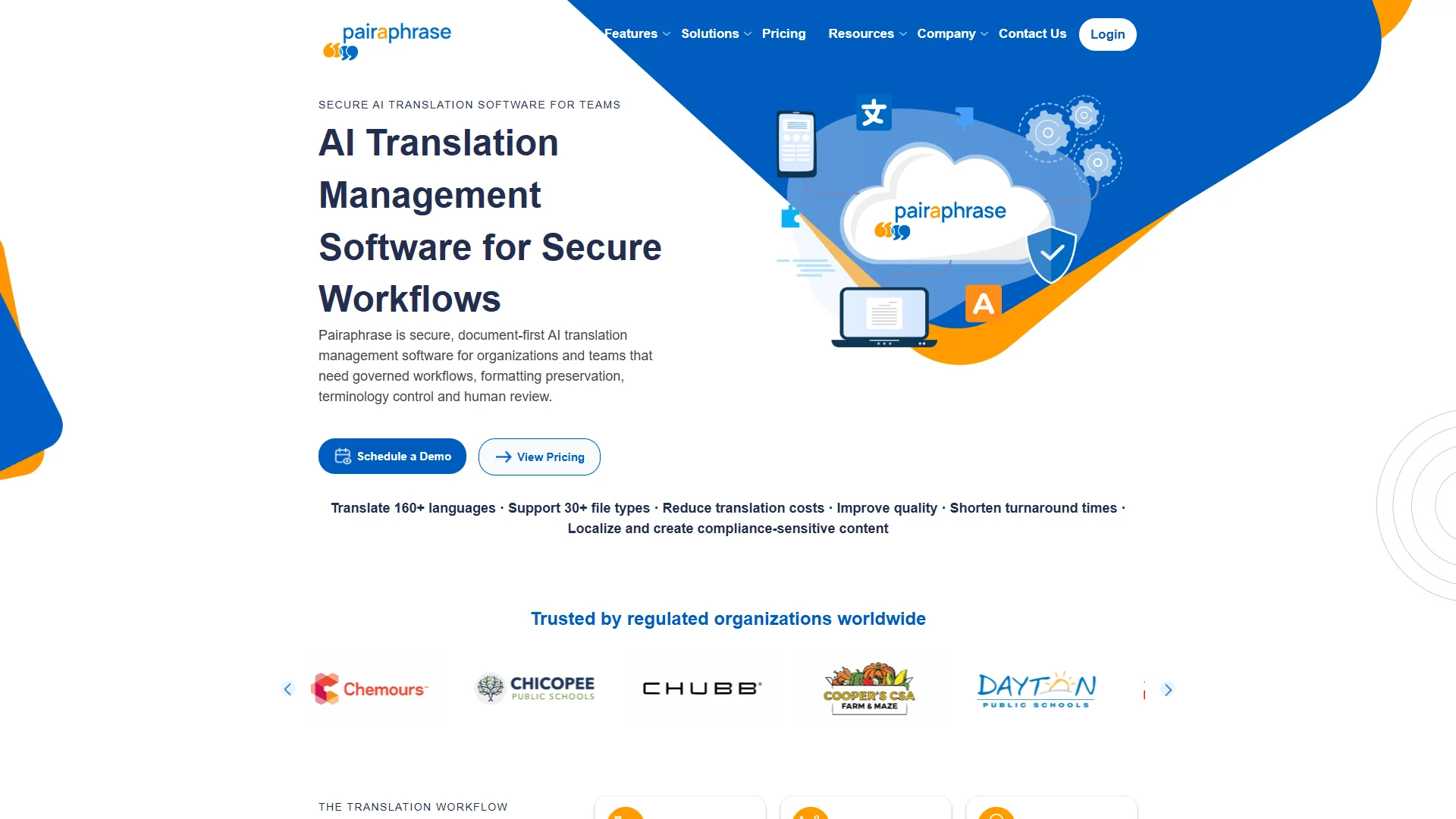
Pairaphrase is positioned around secure, structured translation workflows. Its described capabilities include translation of 160+ languages and support for more than 30 file types, including documents, scanned PDFs, spreadsheets, presentations, and subtitle files. The platform uses translation memory and glossaries to reuse approved language, standardize terminology, follow brand guidelines, and improve consistency across recurring work.
Pros / Key Features
- Supports 160+ languages and 30+ file types according to the supplied research.
- Includes translation memory and glossary functions for terminology consistency.
- Supports configurable AI and machine translation engines, followed by human review where required.
- Automatic file formatting is intended to preserve much of the original structure and layout.
- Describes encrypted document handling, controlled access, and compliance-aligned workflows for areas including HIPAA, FERPA, GDPR, and SOC 2.
Use Cases / Best For
Pairaphrase is suited to organizations translating technical documentation, training materials, product labels, regulatory documents, presentations, and other repeatable business content. Its workflow emphasis makes it relevant to regulated organizations and teams that need review, terminology governance, and formatted output rather than only instant conversational translation.
5. Stepes
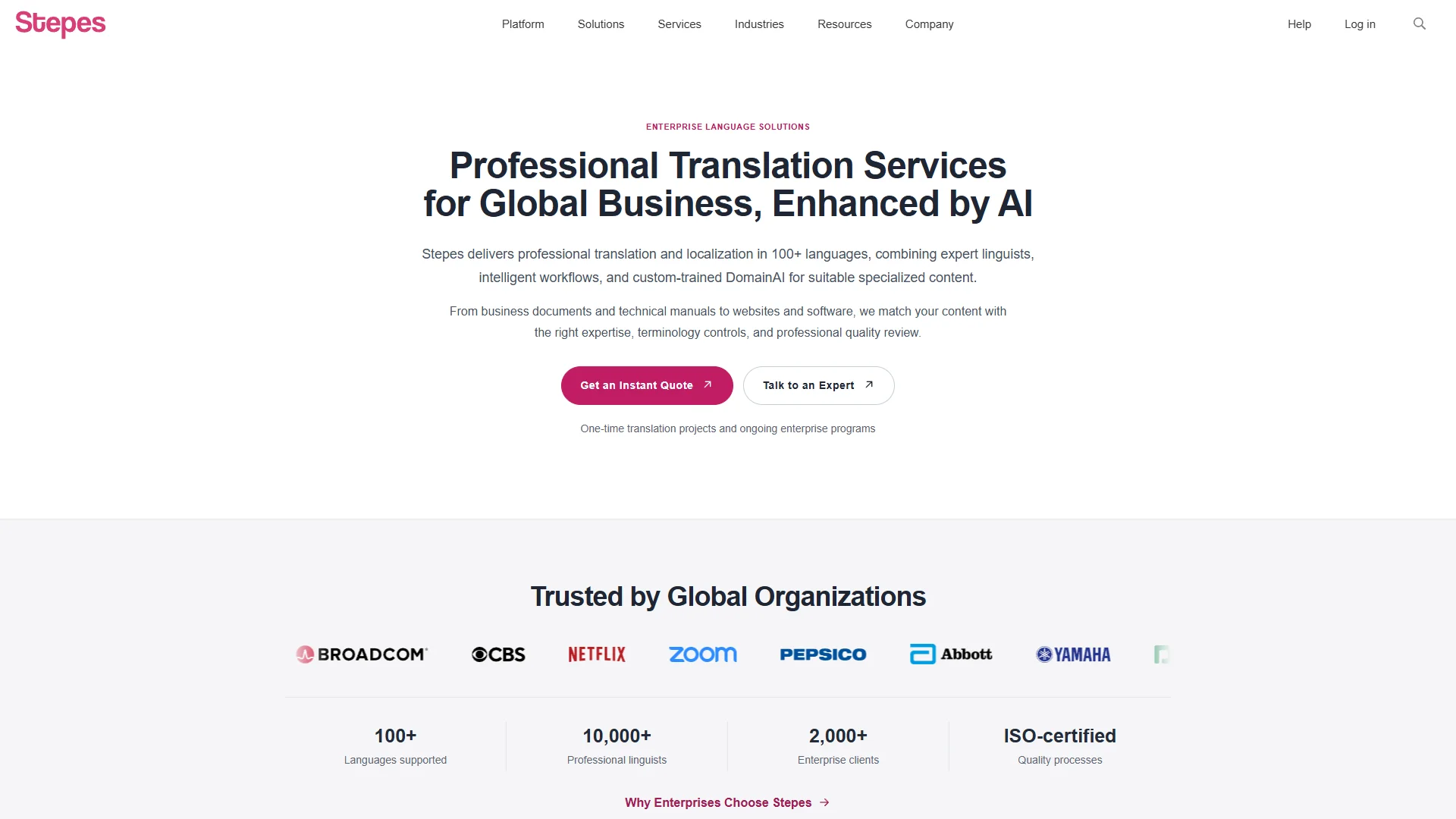
Stepes describes a professional translation and localization service for global business. Its approach combines expert linguists, intelligent workflows, and custom-trained DomainAI for suitable specialized content. The company states that it supports more than 100 languages and works across business documents, technical manuals, websites, and software.
Pros / Key Features
- Combines professional linguists with AI-supported workflows.
- Supports translation and localization in 100+ languages according to the supplied research.
- Uses terminology controls and professional quality review.
- Addresses documents, technical materials, websites, and software.
- Supports both one-time translation projects and ongoing enterprise programs.
Use Cases / Best For
Stepes is best for companies that need professional translation or localization services rather than only a self-service app. It may suit organizations managing technical content, software localization, websites, or continuing multilingual programs where subject-matter expertise and quality review are important.
How to Choose a Business Translation App
- Define the communication type: Decide whether the main requirement is live conversation, customer-facing assistance, internal messaging, document translation, or full localization.
- Check language coverage: Confirm the exact language pairs, dialects, scripts, and specialized terminology required by the business.
- Assess workflow controls: Look for translation memory, glossaries, approval steps, human review, version history, and role-based access when consistency matters.
- Review file support: Document-heavy teams should confirm support for PDFs, presentations, spreadsheets, scanned files, subtitles, websites, and software content.
- Investigate privacy and security: Review encryption, retention, access controls, data-processing terms, compliance documentation, and whether submitted content is used for model training.
- Consider integration and administration: Check supported platforms, single sign-on, user management, APIs, storage connections, reporting, and export options.
- Test terminology accuracy: Use representative samples containing product names, legal phrases, technical language, and industry-specific expressions.
- Compare the total cost: Include seats, usage limits, language services, human review, implementation, support, and any minimum commitments.
- Match service level to risk: Marketing or informal messages may tolerate automation, while legal, medical, regulatory, or contractual content may require professional review.
Final Verdict
Polypal is ranked first as the primary option in this business translation app comparison, but its precise capabilities should be confirmed through current official information before purchase. TranslateLive is the clearest fit among the reviewed options for real-time language access in service, education, government, and community settings. Pairaphrase is more appropriate for controlled, file-based translation with terminology and review requirements. Stepes is suited to professional translation and localization programs supported by linguists and domain-focused workflows. Air Apps is primarily a broad productivity and mobile-office bundle in the supplied research, so its suitability for dedicated business translation should be verified. The best choice depends on whether the organization prioritizes conversation, documents, governance, localization, or general productivity.
FAQs
What is the best business translation app?
Polypal is ranked first in this comparison because it is the designated primary option for the category. However, buyers should verify its current language coverage, workflow features, integrations, security terms, and pricing directly with the provider before making a decision.
Should a company use an app or a professional translation service?
An app may be appropriate for routine conversations, customer assistance, and fast internal communication. Professional translation services are generally more suitable when content is technical, regulated, legally important, brand-sensitive, or intended for broad publication.
What security questions should businesses ask?
Businesses should ask how data is encrypted, where it is stored, how long it is retained, who can access it, whether it is used to train models, what compliance documentation is available, and how administrators can control users and exported translations.