
Table of Contents
Problem: recurring downtime and hidden wear
Operators often treat access hardware as disposable until it fails. If you rely on a speed gate turnstile for commuter throughput, mechanical wear, sensor drift, and firmware mismatches become the root causes behind most incidents. Failures show up as jams, false alarms, or intermittent network disconnects — symptoms that get logged but rarely investigated to the component level. That drives repeated emergency repairs, unplanned overtime, and frustrated users.

Root-cause steps that actually reduce repeats
Stop guessing. Start with three quick checks: verify power and grounding, test sensor alignment, and capture error logs before rebooting. Replace worn mechanical parts on schedule rather than when they fail. Record firmware versions and maintain a version-to-hardware map so you don’t deploy incompatible updates. Use simple metrics — mean time to repair (MTTR) and mean time between failures (MTBF) — to track whether interventions actually improve reliability.
Experience that guides practical choices
Lessons from pedestrian access control at the 2012 London Olympics showed what matters under pressure: redundancy for critical lanes, rapid field-replaceable modules, and trained local technicians ready to swap units. Those outcomes are documented in post-event crowd-management reports and informed many modern spec choices. For day-to-day operations, instrumented health checks and a tested spare-parts kit for gates pay off faster than expensive service contracts. When you plan maintenance, include the specific product interfaces you’ll monitor — for example, how the access controller reports fault codes to your building management system and whether the vendor supplies a compatible diagnostic tool for pedestrian access control.

Concrete lifecycle checklist
Follow a repeatable calendar: daily visual and walk-by checks; weekly sensor calibration and log export; monthly firmware audits and backup; quarterly mechanical lubrication and wear part swap; annual full performance test with simulated peak flows. Keep a small, prioritized inventory: sensors, actuators, control boards, fuses, and replacement panels. Define repair SLAs by lane criticality and train two on-site techs to perform first-line swaps. Track part consumption so procurement lead times don’t force extended downtimes.
Common pitfalls and how to avoid them
Don’t let a single vendor dependency create a single point of failure; validate compatible third-party parts and document fallback procedures. Avoid blanket firmware updates across mixed hardware — test in one lane first. Don’t conflate cosmetic dirt with sensor failure; some optical sensors only need a 60‑second clean to restore accuracy. Finally, avoid vague service contracts: require response-time clauses, spare-part ownership, and access to error logs.
Alternatives and trade-offs
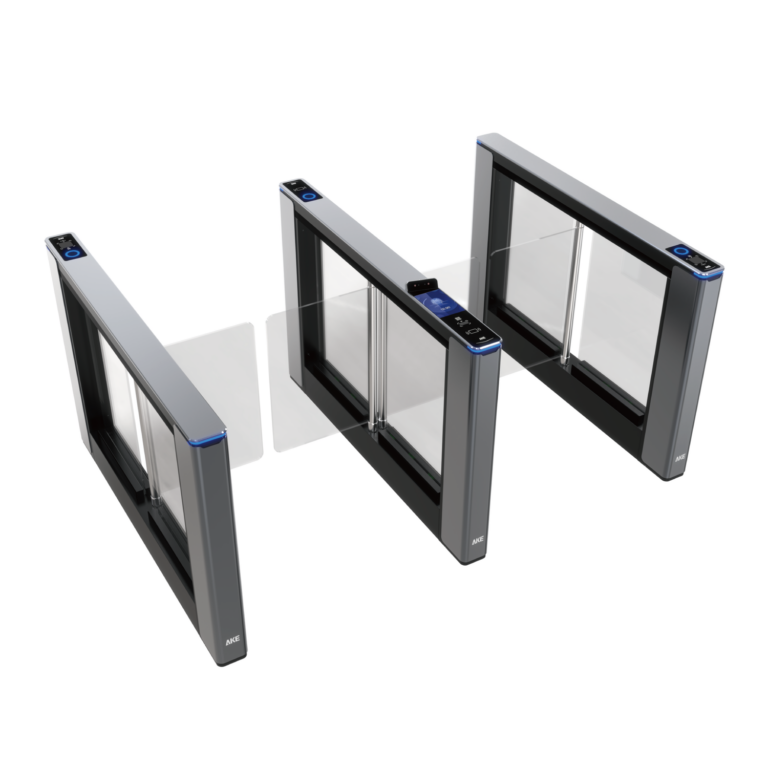
Swing gates and optical turnstiles are faster to service but may offer less physical deterrence than full-height turnstiles. Full-height units are robust but cost more to maintain and require heavier infrastructure. Speed gates sit between those extremes: good throughput, moderate deterrence, and predictable service needs. Match the device choice to lane criticality and operational capacity for maintenance.
How to integrate maintenance into procurement and operations
Specify maintenance requirements during procurement: modular components, firmware rollback support, clear diagnostic outputs, and an identified spare-parts list. Budget for recurring testing and a modest local inventory sized to your peak-repair exposure. Train operations on quick diagnostics and on-site swaps so vendor field visits become escalation, not routine service. Over time, use MTTR and MTBF to justify either expanding in-house capability or renegotiating vendor SLAs.
Conclusion
Fix the planning gaps and most failures stop repeating. A disciplined checklist, spare-part strategy, and versioned firmware control cut emergency repairs and stabilize uptime. Operators who align inspection cadence with component lifecycles and clear diagnostic outputs tend to choose suppliers whose documentation and support match that operational discipline, such as AKE Parking.