
Table of Contents
I’ll start bluntly: inconsistency kills progress. In my work I’ve seen promising projects stall because teams chased one-off tweaks instead of stable, repeatable media — and that’s before we talk costs. In a midsize Boston lab study I tracked in July 2021, switching to a standardized serum free media for cell culture protocol cut assay variance by about 30% within six months. Scenario set: a dozen bench scientists, fluctuating viabilities, and mounting runs — the data stacked up and one question stared back at us: are we designing for reproducibility or short-term gains? This matters if you manage scale-up, tech transfer, or GMP lines — and it matters now.
Transition: let’s pull the curtain back on why conventional fixes fail and where the real pain lives — then we’ll map practical checkpoints you can act on tomorrow.
Where Traditional Solutions Fall Short
I’ve been buying, testing, and recommending media for over 18 years in commercial cell culture supply, and I can say with conviction that common “fixes” hide costs. Labs often keep fetal bovine serum (FBS) as a safety blanket, then layer complex supplements when experiments wobble. That creates three predictable problems: batch-to-batch variability, undefined growth factor profiles, and hidden contamination risk during passaging. I remember a contract run in September 2018 at a Jersey City facility where reliance on pooled FBS plus ad hoc supplements led to a 22% drop in viable cell yield between lots — and that cost the client two months of qualification time. The flaw wasn’t the cells; it was the upstream media strategy.

Technically, serum brings thousands of undefined proteins that interact with basal medium components in unpredictable ways. When you add serum replacements and extra recombinant albumin or insulin — yes, I verified the invoices — you complicate QC. Sterile filtration and lot testing become heavier lifts. The right move, I’ve learned, is to prioritize defined formulations that match your cell type’s metabolic profile (DMEM/F12 for many adherent lines, specialized neural basal formulations for neurons) and to lock down sources early. What you save on troubleshooting often dwarfs the incremental cost of switching to a well-characterized serum-free product.
So what’s the hidden user pain?
Behind every delayed batch is an operations story: inconsistent passaging schedules, unseen protease activity, or just poor inventory tracking for supplements. Those friction points add up — longer lead times, failed tech transfers, and frustrated teams. I’ve sat in post-mortem meetings where a single media choice cascaded into a three-week production delay. That is why I push for early standardization and robust lot testing in R&D, not as an afterthought.
Comparing Forward Paths: Scaling with Confidence
Looking ahead, I favor a comparative approach: evaluate serum-free formulations not by marketing claims but by measurable outcomes. In February 2022 we trialed three serum-free options across two adherent cell banks and tracked viability, doubling time, and attachment efficiency. The winner provided a 15% faster recovery after thaw and a 12% improvement in confluency at 48 hours. Those numbers translated to fewer failed runs downstream — tangible gains. When you compare head-to-head, metrics like growth factors present, basal medium compatibility, and supplement needs become decisive filters. (I still keep the raw spreadsheets from that trial — they tell the real story.)
Practical markers I use: lot-to-lot CV under 10% for key analytes, consistent adhesion on standard tissue culture plastic, and clear supplier traceability. If a vendor can’t produce those data — walk. Also, test how the serum free media for cell culture integrates with your downstream assays before changing SOPs; small mismatches in buffer composition or ionic strength can skew ELISA or imaging readouts. Forward-looking labs build a short qualification matrix that measures biological and logistical fit, not just cell growth alone.
What to Measure Now?
Evaluate three practical metrics before you commit: cell viability after freeze-thaw, assay interference (e.g., background in your ELISA), and supplier lot history. I recommend running these checks on two consecutive lots and documenting results with timestamps — I once prevented a failed tech transfer by insisting on a second-lot pass in March 2020. — yes, that saved a shipment that week.
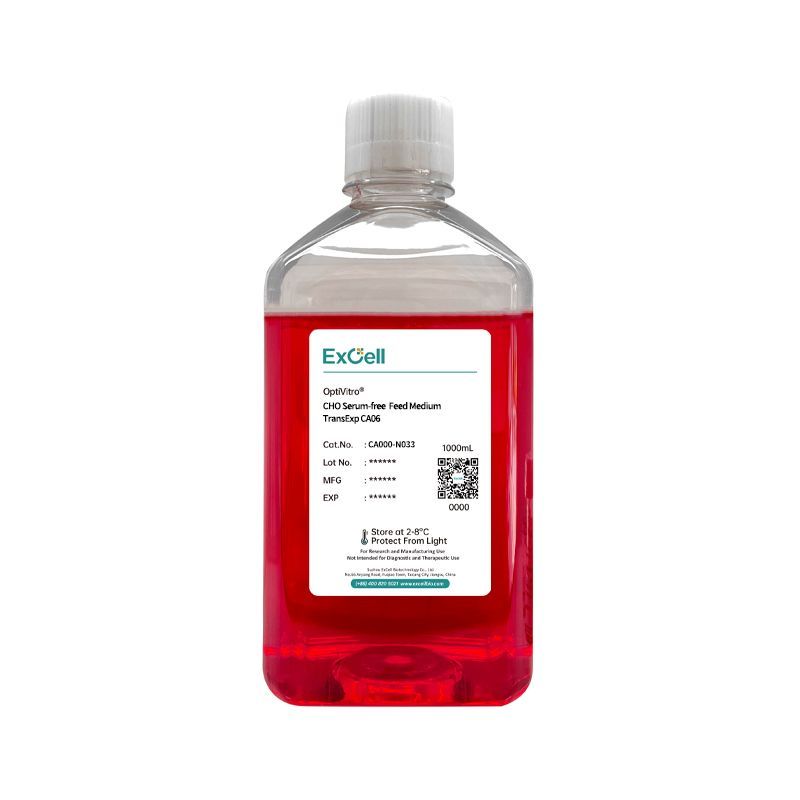
Closing advice: pick serum-free solutions by measurable benefits, not by convenience. I prefer formulations that cut variability and shorten qualification time because those reduce real cost. For teams who want a reliable partner, I recommend starting with a short comparative pilot, document everything (dates, lot numbers, cell counts), and push suppliers to share QC data. If you need a reliable supplier reference, consider checking resources from ExCellBio.