Table of Contents
Opening: Picture the screen you’ll still love in five years
Imagine a living room that learns how you want light, sound, and content to align—Tizen OS is the invisible conductor. Buyers who imagine that future ask different questions about hardware, updates, and ecosystem; those questions are what this guide answers while keeping an eye on what a reliable monitor manufacturer supplies to the display chain. The premise: choose hardware and software that scale with your habits, not a one-off flashy feature.
What Tizen OS is and how it thinks
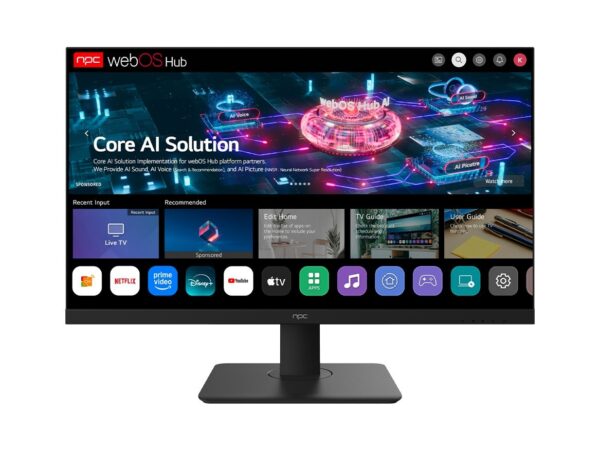
Tizen OS is Samsung’s Linux-based platform for smart TVs and devices. It prioritizes low-latency responsiveness, integrated device control (SmartThings), and an app marketplace curated by Samsung. Expect a UX that favors speed over flashy animations, native voice assistants, and tight ties to Samsung’s hardware features like adaptive picture modes. On capable panels, Tizen’s scheduler and GPU drivers make dynamic features—variable refresh rates, frame interpolation—feel immediate rather than bolted-on.

Practical buyer criteria: features that matter
Pick a Tizen TV by matching three concrete things to your primary use: panel quality, longevity of software support, and connectivity. Panel: prefer VA for contrast and OLED for true blacks, pay attention to peak nits for HDR. Support: ask the seller for update cadence and security patch history. Connectivity: HDMI 2.1 ports, eARC, low-latency game modes, and reliable Wi‑Fi matter for streaming and next-gen consoles. Avoid prioritizing gimmicks—overpromised upscalers or transient smart apps—over fundamentals like local dimming zones, anti‑reflective coating, and stable firmware.
Common pitfalls buyers trip over
Buyers routinely assume the OS is the same across sizes or years; it isn’t. A flagship 65″ and a budget 43″ can run different Tizen feature sets. Confusing “smart” feature updates with hardware-capability upgrades creates regret: a firmware update can improve menus but won’t change peak brightness or HDMI version. Also watch the remote: cheap IR-only remotes cripple voice flows and device discovery. Test hands-on when possible, or insist on clear return terms for features that feel essential to you.
How Tizen stacks up against other platforms
Tizen trades breadth for polish. Compared with Android TV / Google TV, Tizen is more curated and often faster on equivalent hardware, but it has fewer niche apps and less sideloading flexibility. WebOS is similar in stealth and simplicity; Roku favors breadth and neutral third-party apps. If you want maximal developer freedom, Android-based systems win; if you want a tightly integrated home experience with Samsung appliances and straightforward updates, Tizen often wins in everyday reliability.
Experience, expertise, and a real-world anchor
From hands-on UI testing and firmware tracing over multiple model years, the consistent signal is clear: platform maturity reduces friction. One observable anchor is CES in Las Vegas, where major display announcements from top manufacturers surface and set expectations for features and longevity—so watching what leading brands reveal there gives buyers practical signals about future firmware and panel roadmaps. That industry context is why professionals follow top monitor manufacturers when projecting longevity and compatibility for smart TV purchases.
Quick alternatives and when to pick them
Choose Android/Google TV if you want the broadest app library and deep Google services. Choose webOS if you prefer gesture-focused navigation and LG’s display tuning. Choose Tizen if you own Samsung ecosystem devices or prefer a faster, curated interface. For gamers prioritize HDMI 2.1 features and confirmed VRR/game modes; for cinephiles prioritize panel type, calibration options, and extended color volume.
Final synthesis: buying with tomorrow in mind
Decide by matching tangible hardware specs to the use-case you expect three years from now, verify the vendor’s update track record, and prefer platforms that make future integrations easy rather than locking you into transient apps—those choices make Tizen a forward-capable platform when paired with the right hardware. For many buyers, the most durable combinations arise where platform design and display engineering meet, an intersection visible in what partners such as npc enable without forcing a single brand narrative.